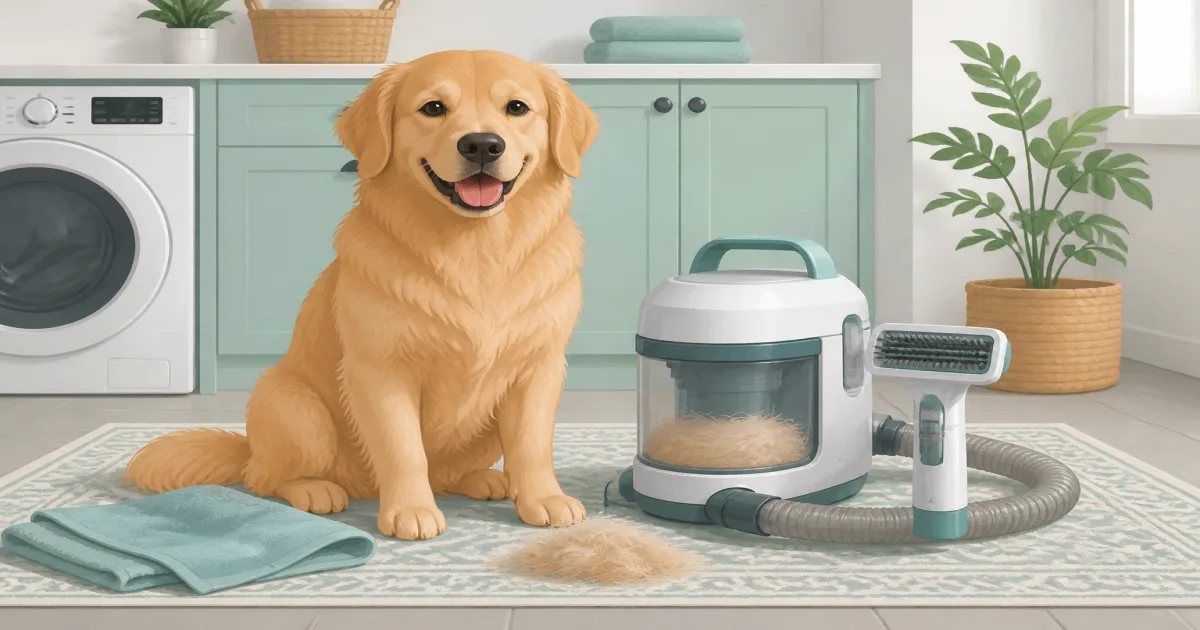
How to Use a Pet Grooming Vacuum Without Making a Mess
Accessories
A grooming vacuum catches loose fur while you brush, but a slow introduction and the right attachment matter more than maximum suction.
Our picks
Pet grooming vacuums are appealing because they put the loose undercoat in a container instead of on your rug. They work best for a dog that already accepts brushing. If your dog is nervous about a regular brush, the sound of a motor will not improve the situation.
The oneisall Dog Grooming Vacuum with Clipper Nail Grinder is a brush-first kit with a dust cup, hose, and clipper. Start with the motor across the room. Use the soft brush for a few minutes. Empty the cup before it packs tight. There is no prize for doing the full coat on day one.
Grooming and cleanup gear live together in the accessories.
Pick a quiet place with a washable floor
Set up in a room where loose hair is not a disaster. A laundry room, entryway, or bathroom with a non-slip mat is easier than a carpeted bedroom. Keep treats, a regular brush, and a towel within reach.
Do not corner your dog between the vacuum and a wall. Leave a clear exit. A pet that knows it can step away is less likely to panic.
Empty the dust cup before every session. A full cup cuts suction and makes the cleanup worse than it needs to be.
Introduce the machine in small steps
First, let your pet inspect the machine while it is unplugged or switched off. Reward calm sniffing. Next, run it several feet away for five or ten seconds, then turn it off and reward again.
Repeat that step over a few days. Once your pet can stay relaxed near the sound, hold the hose near their shoulder without using the brush. Only then try a short stroke with the grooming attachment.
There is no prize for doing the full coat on day one. Stop while your dog is still comfortable. That makes the next session easier.
Start with the brush, not maximum suction
Use the soft brush or deshedding head that suits your pet's coat. Begin at the shoulder or back, where most dogs are less touchy. Brush in the direction the hair grows with light pressure.
Avoid the face, ears, belly, tail, and joints until your dog is used to the tool. Those areas are sensitive. You can use a normal hand brush there if that is more comfortable. For undercoat on double-coated dogs, a dedicated deshedding brush for dogs is the hand tool that matches that job.
Start on a low setting. Stronger suction does not mean better grooming. If the attachment tugs, makes a loud whistle, or pulls the skin, lower the setting and shorten the session.
Match the tool to the coat
Short-coated dogs often need a gentle brush to lift loose hair. Double-coated dogs can shed heavily, but avoid pulling hard at the undercoat. Curly or long coats need detangling before any vacuum brush. A tool dragged through a mat can hurt and damage the coat.
Check skin as you work. Stop if you see redness, a sore spot, fleas, a rash, or a lump. A grooming vacuum is not a medical tool.
Cats are less predictable. Some will tolerate a quiet brush attachment. Many will not. Use a regular brush instead of turning grooming into a fight.
Keep sessions short during a heavy shed
Five calm minutes is enough at first. During seasonal shedding, you can repeat that two or three times a week. Frequent short brushing catches loose hair before it tangles into furniture and bedding.
If your goal is cleaner air, pair brushing with vacuuming floors and washing pet bedding. An air purifier for pets can catch some airborne dander, but it cannot collect the coat sitting under the couch.
Pay attention to your dog's body language. Stiff legs, pinned ears, lip licking, or a repeated attempt to leave mean you should stop. Treat those signs as useful feedback, not defiance.
Empty and clean the vacuum after use
Turn the unit off and unplug it before opening the dust cup. Empty fur into a trash bag, not a sink drain. Check the brush head for wrapped hair and follow the product instructions for cleaning filters.
Do not rinse parts unless the manufacturer calls them washable. Wet filters can damage the machine and reduce suction. Let washable parts dry fully before reassembly.
Keep clipper and nail-grinder attachments separate from the fur brush. If your dog needs nail care, our guide to a dog nail grinder covers the slower, safer approach.
Bottom line
A pet grooming vacuum is most useful when it makes regular brushing easier to keep up. The oneisall Dog Grooming Vacuum with Clipper Nail Grinder is a well-reviewed option with a contained cup and several grooming tools. Start on low power, work in short sessions, and stop before your pet decides the machine is bad news.
Frequently Asked Questions
Do pet grooming vacuums work?
They can catch loose fur as you brush, which reduces what lands on the floor. They do not replace regular bathing, coat care, or professional grooming for difficult mats.
Are pet grooming vacuums loud?
They make a motor sound, though many models have adjustable suction. Introduce the sound from a distance and keep early sessions brief.
Can I use a grooming vacuum on a cat?
Only if the cat is comfortable with the noise and brush. Many cats prefer a regular brush, so do not force the tool.
What attachment should I use first?
Start with the softest brush that suits your pet's coat. Save clipper heads and concentrated suction tools for after your pet accepts the noise.
How often should I groom a shedding dog?
Most dogs do well with a few short sessions a week during a shed. The right schedule depends on coat type and how much loose fur you see.
Can a grooming vacuum remove mats?
No. Do not pull a vacuum brush through a tight mat. Ask a groomer for help so you do not hurt the skin underneath.