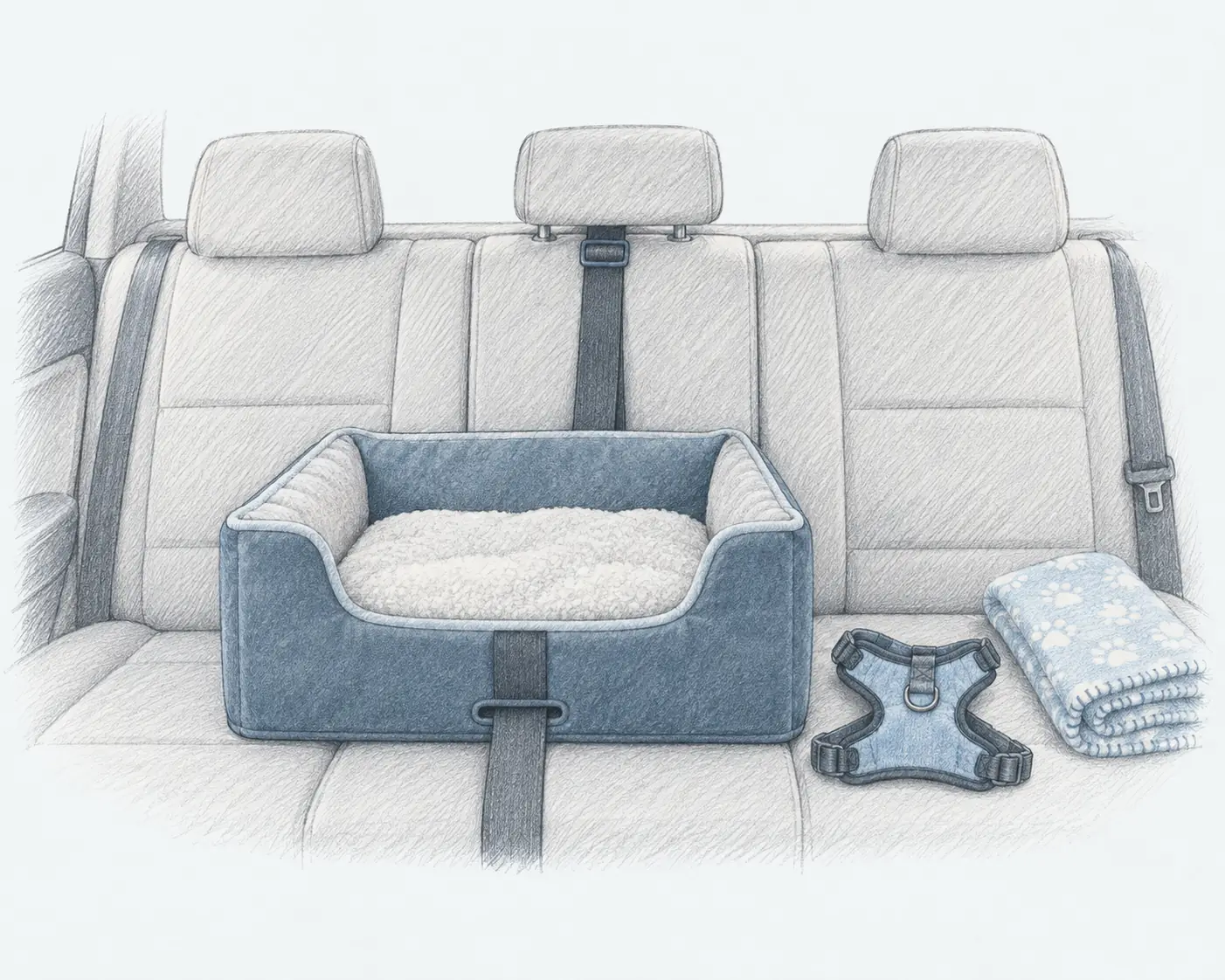
Best Dog Car Seat for Small Dogs (2026): Picks That Fit Under 25 lb
Accessories
The best dog car seat for small dogs is the one your dog cannot step out of and you can wash. Start with the BurgeonNest for dogs 8 to 25 pounds, the JOEJOY Elevated for the tallest window line, and the PETICON Waterproof when mud and carsickness are the real problem.
Our picks
The best dog car seat for small dogs is the one your dog cannot step out of on a normal drive, that clips to a harness rather than a collar, and whose cover you can actually strip and wash. Size decides more of that than brand. A soft basket built around a 5 pound Chihuahua swallows a 20 pound French Bulldog, and a seat sized for a 25 pound dog lets a 6 pound puppy rattle around until it climbs the rim.
Start with the pet accessories guides if you are still sorting travel gear, and read our dog car seat guide for the belt routing basics. If your dog is closer to 55 pounds and up, the dog car seat for large dogs page covers platforms and hard bottom extenders instead. A dog seat belt and a harness are the parts that carry the load, so plan those at the same time.
What size car seat does a small dog actually need?
Measure nose to tail with the dog lying the way it rides, then compare that to the listed interior, not the exterior footprint. A 25 pound cap is a rough ceiling, and a long bodied dog at that weight will feel the walls.
Measure the dog, not the breed chart
Breed weight charts are a starting point and nothing more. Two Boston Terriers from the same litter can sit a size apart.
Put the dog on the floor, let it lie down the way it does in the car, and run a tape from the tip of the nose to the base of the tail. That number, plus a couple of inches of slack, is the interior length you want.
Then check the standing height to the shoulder against the wall height. The second most common complaint after sliding is a dog that cannot see over the side without standing on the pad.
Why the listed weight cap is not a fit guarantee
A 19 inch interior and a 25 pound cap answer different questions. The cap tells you what the foam can hold. The interior tells you whether your dog fits lying down, turning around, and putting a paw on the rim. Owners of 5 to 15 pound dogs consistently describe the BurgeonNest as roomy, and owners closer to the cap describe the same seat as snug. Neither is wrong. The dog changed, not the seat.
Fit ladder for small dogs
The step over the rim matters as much as the length. A seat with 13 inch walls keeps a small dog inside during normal driving. Below that, a determined dog can put its paws on the edge and lean.
Best overall: BurgeonNest
The BurgeonNest Dog Car Seat for Small Dogs and Cats Under 25 lbs is the pick for most homes with a dog between 8 and 25 pounds. It measures about 21.65 by 19.68 by 13.78 inches, weighs 3.31 pounds, and runs on the strength of more than 10,000 ratings at 4.5 stars. That is by far the most reviews in this size class, and it matters here because the category has a lot of identical looking listings with thin histories.
Two things put it on top. The seat belt threads through the base rather than through an elastic strap, which is what keeps the seat from walking across the bench. Inside, an adjustable strap anchors to a harness, so the dog is held at the chest instead of the throat. The non slip base and the headrest strap handle the rest.
The honest tradeoff is the base. It is soft foam, so the walls flex when a dog leans into them on a hard turn. That is containment, not a rigid cage. For a calm rider it is invisible. For a dog that throws itself at the side, a rigid base or a crate is the better answer.
Best for the window line: JOEJOY Elevated
The JOEJOY Elevated Dog Car Seat is the pick when the problem is the view. The seat raises a dog about 5 inches, and the high density memory foam keeps that lift from collapsing into a flat pad after a couple of months. It is rated for one dog up to 35 pounds or two small dogs up to 15 pounds each, which makes it the one seat here that can carry a pair.
The usable interior is about 19 by 18 by 18.5 inches. The product's own specs list two different dimension sets and a 30 pound rating next to a 35 pound headline, so measure rather than trust the title if your dog is anywhere near the top of the range. Owners using 20 to 24 pound dogs report a good fit.
The dual sided cover is the detail that keeps it in the car year round. Short plush on one side for winter, faux leather on the other for wiping drool in July. Both sides unzip for washing. The two side pockets take a leash and a bag of treats, and the non slip base plus headrest strap hold it in place.
Two real limits. The retention strap runs long on very small dogs, so check it against your dog with a harness on. And the back loops are too small for some seat belt latch shapes, which pushes the whole install onto the headrest strap.
Best for muddy paws and carsick cleanups: PETICON Waterproof
The PETICON Waterproof Dog Car Seat is the one to buy if your dog gets wet, muddy, or sick in the car. A 6 inch thick high density memory foam base sits under a waterproof liner, and the removable cover is machine washable and dryer safe. That combination is rarer than it should be, because most seats in this price band are spot clean only.
The seat measures about 18 by 16.3 by 19.7 inches, so it suits a dog up to the small side of medium. The reversible cover has a cooling Oxford face for summer and a plush face for winter. The Y shaped safety belt is designed so the strap does not cross the throat, which matters more for small breeds than most listings admit.
That throat detail is not marketing. A collar concentrates the whole restraining load on the front of the neck, over the trachea, and small breeds already carry a higher rate of tracheal weakness. A Y belt plus a chest plate harness spreads that load across the sternum. If you take one thing off this page, take that.
How much should you spend on a small-dog car seat?
Spend in the $35 to $60 band for a dog that rides weekly. Below about $30 you usually lose real belt routing and a proper anchor. Above about $80 you are mostly paying for fabric and brand, unless you step all the way up to a crash tested product.
What the cheap tier gives up
The cheap seats are not dangerous on a calm dog on a short errand. They are a cushion with a thin fabric strap and a plastic clip. The clip stops a dog from wandering. It does nothing under real load, because a tether anchored to fabric transfers force to stitching. The two upgrades that matter as you move up the price band are belt routing through the base and an anchor built into the frame rather than sewn onto the cover. Both show up around the middle of the band.
Pick comparison
Run the numbers before you decide the money is the issue. A $39.99 seat that lasts three years at five short trips a week works out to about five cents a trip. A $25 seat that the cover gives out on in 14 months costs you the same or more, and you get to shop again next spring.
Is any dog car seat crash tested?
Almost none of the boosters you can buy are crash tested, and the ones that are tend to be cradles or harnesses rather than boosters. The Center for Pet Safety does not recommend open booster seats at all. Treat every booster on this page as containment and comfort, not crash protection.
What the 2015 Center for Pet Safety pilot found
The pilot put four popular small-dog travel seats through a 30 mph sled test. The Snoozer Lookout anchor strap failed and the 25 pound test dog ended up unrestrained. The Kurgo Skybox connections failed and the seat became a loose projectile. The PetSmart Top Paw booster's wire hardware deformed and its test dog came free. The PupSaver rotated and rolled onto its side, and one anchor buckle released. Only one of the four seats stayed attached and kept its occupant connected.
Crash evidence in plain terms
The practical takeaway is not that boosters are useless. It is that the tether is only as good as its anchor, and the harness is doing the safety work. If you want a tested restraint, buy a crash tested harness or an anchored crate, and use the booster for the everyday ride.
Where a booster still earns its place
A booster solves problems a harness cannot. It stops the dog from sliding into the footwell on a brake, it gives a horizon that reduces carsickness, and it keeps a small dog off your lap. Those are real wins on every single drive. Pair the booster with a fitted harness, keep the dog in the back seat, and treat the tether as management rather than a seat belt.
How do you install a booster so it stops sliding?
Thread the seat belt through the base or use both the headrest strap and the anchor, then press the seat side to side with your hand. It should not shift. If it moves now, it will move with a 15 pound dog leaning on it.
The two finger harness check
Sit the harness on the dog and try to slide two flat fingers under it at the chest, the back, and the neck. If you cannot fit two, it is too tight. If you can fit a whole hand, it is too loose and the dog can back out in a panic. Check it again after the first few drives, because new webbing settles and loosens.
A thirty second install routine
- Seat the booster on the bench and press it flat.
- Thread the belt through the base, or clip the headrest strap and tighten.
- Pull the tether through and clip it to the harness, never the collar.
- Press the seat side to side and check the tether length.
- Take one loop around the block before a long trip.
When is a car seat the wrong answer for a small dog?
Skip a booster if your dog panics in a moving car no matter how it is contained, chews through straps, or vaults the rim. Skip it if you want crash protection, because a booster is not that. And skip the front seat entirely if your car has an active passenger airbag.
A small dog that screams for the whole drive has a training problem, not a seat problem. Short calm loops, a favorite blanket, and a settled stomach fix more than a fourth purchase. If the dog cannot travel safely at all, talk to your vet or a trainer before you spend more on gear.
Bottom line
Buy the BurgeonNest Dog Car Seat for most dogs between 8 and 25 pounds. Belt routing, a real internal anchor, and a machine washable cover are the three things that decide whether a booster survives a year.
Move to the JOEJOY Elevated Dog Car Seat when the view is the problem, and take the PETICON Waterproof Dog Car Seat if mud, rain, and carsickness are the weekly reality. Whatever you pick, clip the tether to a harness, keep the dog in the back seat, and check the straps every few weeks.
Frequently Asked Questions
What is the best dog car seat for small dogs?
The BurgeonNest Dog Car Seat for Small Dogs and Cats Under 25 lbs is the best default for a dog in the 8 to 25 pound range. It routes the vehicle seat belt through the base, has an internal strap anchor for a harness, and the cover comes off for washing. Choose the JOEJOY Elevated for the tallest view, or the PETICON Waterproof for muddy and carsick trips.
Are dog car seats good for small dogs?
They help with three things: sliding, carsickness, and the climb onto your lap. A booster keeps a small dog in one spot and gives it a horizon to look at. It is not a crash restraint, so pair it with a fitted harness and keep the dog in the back seat.
What is the safest way for a small dog to travel in a car?
In an anchored crate or a crash rated harness on the back seat, away from an active airbag. A booster plus a harness tether is the next step down. Never clip a tether to a collar, because a hard stop puts the whole load on the neck.
What is the best dog car seat for two small dogs?
A wide booster rated for two dogs under 15 pounds each, like the JOEJOY Elevated, works if both dogs settle. Most pairs do better with one seat each. Two dogs sharing one tether get tangled, and one always ends up leaning on the other.
How do I measure my dog for a car seat?
Measure nose to tail with the dog lying the way it rides, then measure standing height to the shoulder. Compare that with the listed interior, not the exterior. A seat with a 25 pound cap still feels tight for a long bodied dog at that weight.
Can a small dog ride in the front seat?
Only if your vehicle manual allows a restraint there. An active passenger airbag deploys at a small dog the way it deploys at a child. The back seat, ideally the middle, has the most distance from a front impact.
How do I stop the seat from sliding?
Thread the seat belt through the base or use both the headrest strap and the anchor, then press the seat side to side before your dog gets in. If it moves, the tether is doing nothing. Recheck the straps every few weeks as the fabric settles.
Is a cheap dog car seat worth it?
Below about $30 you usually give up real belt routing and a metal or sewn in anchor, and those are the two parts that matter. The $35 to $60 band is where a booster starts being containment instead of a cushion. Spend there unless the seat is for a calm dog on short errands.