Best Dog Sling Carrier (2026): Hands-Free Picks for Small Dogs
Accessories
A dog sling carrier keeps a small dog against your chest with both hands free. Pick by weight and strap fit first, then decide whether you want a padded zip-top sling or a light wrap for a puppy.
Our picks
The best dog sling carrier for most small dogs is the Noah & Paw Dog Sling Carrier for Small Dogs 5-18lb, on the strength of its padded strap and two safety layers. A sling is the travel option for a dog that is too small to walk far and too attached to leave at home.
It keeps the dog against your chest with both hands free, which is why it works for bus rides, farmers markets, and vet visits where a stroller is overkill.
Sizing is the whole game. A dog that sits too low, rides too high, or fights the opening will hate the bag. Two solid options are below, and both use a simple over-the-shoulder shape that most small dogs accept quickly.
These are travel extras in the accessories group. If your dog travels in something bigger, compare the best dog carrier for soft cabin bags and hard kennels, the best dog backpack for packs the dog wears, and the best dog stroller when the dog needs wheels instead of a carry. Cat-only travel lives in the best cat carrier guide.
What a dog sling carrier is for
Think of a sling as a wearable pouch. The dog rides against your chest or hip, supported by a strap that crosses your shoulder. It is not a crate and it is not a crash-tested car seat.
The jobs it does best:
- A senior or injured dog that cannot finish a walk.
- A puppy that is too young for long outings or full vaccination.
- A small dog in a crowd, on transit, or in a store.
- A nervous dog that calms down when held close.
The jobs it does not do: carrying a medium or large dog, protecting a dog in a crash, or replacing a crate for house training. Use it for what it is.
Top pick: Noah & Paw Dog Sling Carrier
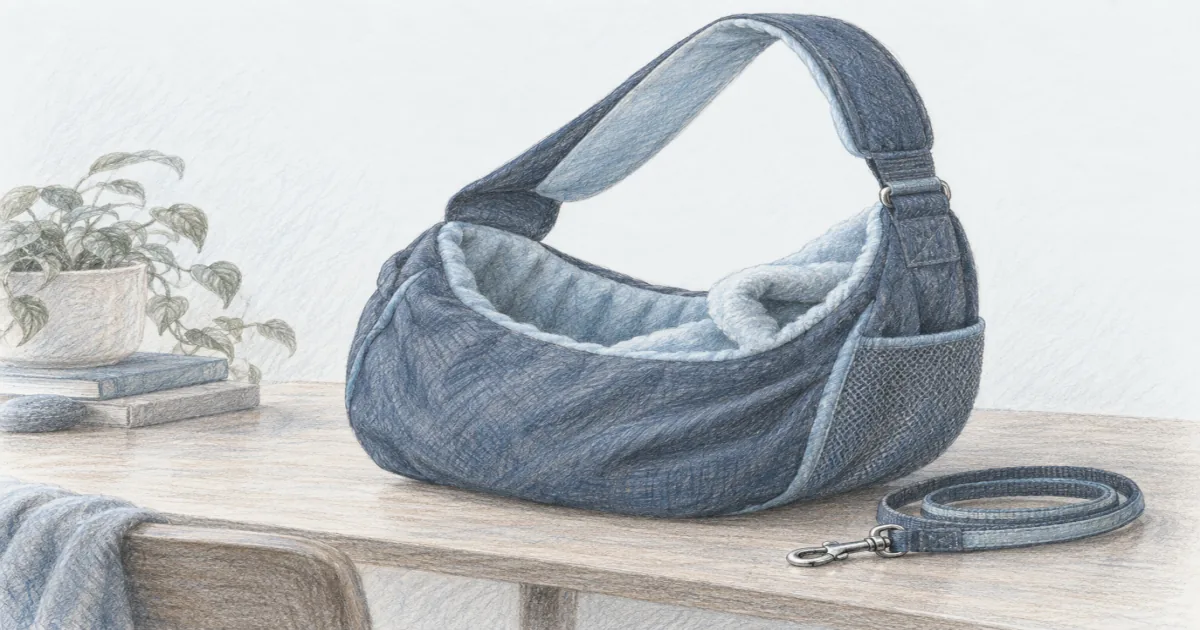
The Noah & Paw Dog Sling Carrier for Small Dogs 5-18lb is the top pick because the fit does the work. The strap is padded and adjustable, so it works on a tall adult and a shorter family member without the dog bouncing at your hip. The interior is fur-lined, which keeps a thin-coated small dog warm on a cold walk.
Two safety layers are the reason to step up from a bare wrap. A belt clips to a harness, and a head strap snaps the opening closed. A wriggler can still see out, but it cannot launch over the side.
It handles a 5 to 18 pound dog or cat, and it is machine washable. Give it a hand wash or a gentle cycle and skip the dryer, since heat is what shrinks the lining and warps the strap padding.
Best budget: Tomkas Small Dog Sling Carrier
The Tomkas Small Dog Sling Carrier is the budget pick and the better first sling for a puppy. It is a simple reversible wrap for dogs from 3 to 10 pounds, with an internal hook that clips to a harness or collar and a front pocket for keys, bags, and treats.
It is light enough to fold into a bag and soft enough that most puppies settle after a few short sessions. That makes it a low-risk way to find out whether your dog will tolerate a sling at all before you spend more.
The limits are real. Some variants have a strap that does not adjust, the fabric pills over time, and one tester had the front zip pocket fail. Size it to the dog and keep loads short.
Sling vs soft carrier vs backpack vs stroller
A sling is the smallest and lightest of the four. A soft carrier gives the dog more structure and a flatter base. A backpack is for hiking. A stroller is for a dog that still wants to walk but cannot go all day.
How to size and fit a sling
- Weigh the dog. Every sling has a hard weight range. Do not stretch it; a bag that sags puts pressure on the dog's spine.
- Measure body length. Nose to tail base, then add about an inch. The dog should be able to lie or sit without its head forced against the opening.
- Check the strap. It should adjust long enough for the tallest person in the house and short enough for a shorter one without sliding off the shoulder.
- Test the opening. The dog should see out and breathe easily. If the head strap sits on the throat, loosen it.
- Fit the safety clip to a harness, not a collar. If the dog jumps, a collar clip can hurt the neck.
How to get a dog to accept a sling
Start slow. Leave the sling on the dog's bed for a day so it picks up a familiar smell. Then put the dog in after a bathroom trip, with a treat, for a minute or two at a time.
Do short walks first, not a full errand. A puppy that fights the bag on day one often settles once walking becomes the routine. If a dog panics or keeps trying to climb out, pause and size up or down rather than forcing it.
Bring a spare pad or a small blanket for the first few trips. Most slings wash, but a light liner saves you a full clean after an accident.
Mistakes that make a sling uncomfortable
- Buying for looks over weight. A stylish bag that is too small is a bad carry for the dog and your shoulder.
- A strap that is too long. The dog rides at your hip and swings, which the dog feels on every step.
- Skipping the bathroom trip. Most first-trip accidents are avoidable.
- Loading a dog that is already overexcited. Calm the dog first, then load.
- Treating a sling as a car seat. A sling is not crash protection. Use a dog seat belt or a carrier for car travel.
Bottom line
The Noah & Paw Dog Sling Carrier for Small Dogs 5-18lb is the best dog sling carrier for most small dogs and cats because the padded strap, fur lining, and two safety layers make a close carry comfortable for both of you.
The Tomkas Small Dog Sling Carrier is the best budget pick for a puppy or a dog under 10 pounds. Match the sling to the dog's weight, fit the strap to your body, and let the dog learn the bag on short trips before you plan a long day out.
Frequently Asked Questions
Are dog slings good for dogs?
For small, young, senior, or injured dogs, yes. A sling keeps a pet close, frees both your hands, and lets a dog that cannot walk far still come along. It is not a crate and not a crash-tested seat. Think of it as a carrier for short trips and tired dogs, not a replacement for a bed or a kennel.
What is the best dog sling carrier for most small dogs?
The Noah & Paw Dog Sling Carrier for Small Dogs 5-18lb, Premium Twill, Lined with Fur is the pick for most owners. The padded strap spreads weight, the fur lining keeps the dog cozy, and the two safety layers make it hard for a wriggler to climb out. Choose the Tomkas Small Dog Sling Carrier for a puppy or a dog under 10 pounds on a tight budget.
What is the best dog sling for lifting a large dog?
A shoulder sling carrier is not built for a large dog, and honestly it should not be used that way. A 60 pound dog needs a rear-support lifting sling or a mobility harness that a helper uses to take weight off the hind legs. This guide is about carrying small pets in front, not lifting big ones.
What is the best dog sling for supporting my dog's back legs?
That is a different tool: a belly sling or rear-lift harness that runs under the hindquarters and lets you take some weight while the dog walks. Look for one with a wide padded band and a handle. Use it for post-surgery or senior dogs under a vet's guidance, not as a full carry.
How do I choose the right dog sling carrier?
Start with weight and body length, then the strap. Measure the dog and add about an inch for comfort. Check that the shoulder strap adjusts long enough for you and short enough for another family member. Look for a safety clip inside, a washable body, and an opening the dog can comfortably see and breathe through.
What size dog fits a sling carrier?
Most slings are built for 5 to 18 pound dogs and cats. The Tomkas here tops out around 10 pounds, and a 4 pound dog can look lost in a large sling. If your dog is near the top of a range, size up only if the weight limit supports it. A dog that does not fit will fight the bag.
Can a dog sling carrier hold a cat?
Yes, as long as the cat fits the weight range and accepts being held. Many small dogs and cats share a bag, but scent stress is real, so keep a separate sling if the cat is nervous. Introduce it the same way you would with a dog: short, calm sessions with treats.
How do I get a dog used to a sling?
Let the sling sit near the dog's bed for a day so it smells familiar. Then load the dog after a bathroom trip, with a treat, for two minutes at a time and build up. A puppy that fusses at first often settles after a few short walks. Never force a dog that is panicking; go back a step.