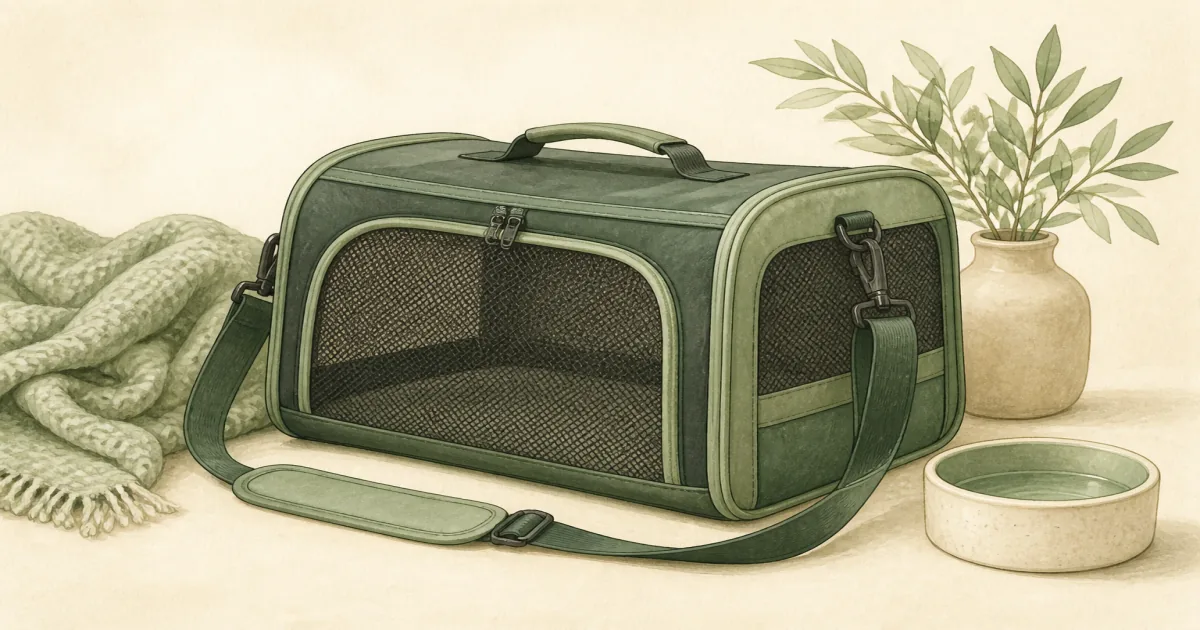
Best Dog Carrier (2026): Cabin Bags and Car Kennels That Fit
Beds and crates
The best dog carrier matches the trip, not the photo. A soft cabin bag wins under the seat, a $16 mesh bag wins for errands, and a two-door kennel wins for car rides and vet days when you want rigid walls.
Our picks
The best dog carrier for a small dog is the Sherpa Original Deluxe, because it is the one bag here built around an under-seat box and a dog that has to stand inside it. The other two exist for different days: a $16 mesh bag for the trunk and the vet lobby, and a hard two-door kennel for the back seat.
Carriers fail in two ways. The dog does not fit, or the shell is wrong for the trip. Both problems show up before you buy if you measure the interior and think about where the carrier is going.
Travel gear shares a shelf with the rest of the everyday kit, so start with the beds and crates section and the dog crate pillar if home confinement is the real job. Traveling with a cat instead? The cat carrier guide covers the top-load boxes and cabin bags built for that job, and the dog stroller covers the days a dog needs wheels rather than a bag.
Soft bag or hard kennel: which one fits your trip?
Buy a soft bag for cabin flights and short carries, and a hard kennel for car rides and clinic visits. Soft shells compress to fit under a seat. Hard shells hold their shape, wipe clean, and sit flat on a bench.
Cabin flights under the seat
The airline decides this one. Under-seat space on a regional jet is smaller than the space on a wide-body, and the carrier has to fit without crushing the dog. That is why a compressible soft bag with a frame beats a rigid box for cabin travel.
Car rides and vet days
A hard kennel does two jobs in the car. It keeps the dog from pacing the bench, and it gives a nervous dog walls to brace against. The plastic shell also wipes clean after carsickness, which a fabric bag cannot promise.
Errands on foot
A cheap mesh bag is the one you leave in the trunk. It is light enough to carry one-handed, it opens from the top for a quick load, and it costs less than a decent bag of dog food. Keep the rigid insert in it and it does not sag.
Hero pick: Sherpa Original Deluxe in charcoal medium
The Sherpa Original Deluxe Travel Pet Carrier, Airline Approved & Guaranteed On Board - Charcoal Gray, Medium is the hero when under-seat cabin travel matters. It measures 17 by 11 by 10.5 inches, weighs 3.4 pounds, and is rated for pets up to 16 pounds.
The frame compresses, the mesh panels keep air moving, and the zippers lock so a paw cannot work them open at the gate. The waterproof base handles a nervous accident, the removable liner goes in the wash, and the luggage strap doubles as a seat-belt strap for the car ride to the airport.
At about $53, it costs roughly $3.29 per pound of rated dog, which is the premium you pay for a bag an airline will actually accept. Skip it for a dog that clearly needs a cargo kennel, and skip it if your dog is near the 16 pound ceiling, because the liner pad takes up room once it is in.
What the medium actually measures
Seventeen inches of length sounds generous until you subtract the liner and a folded towel. A 15 pound dog with a long back will touch both ends. Measure nose to tail base and floor to shoulder, then compare those two numbers to 17 and 10.5 before you trust the weight ceiling.
Everyday value bag: Amazon Basics mesh carrier
The Amazon Basics Airline Approved Soft-Sided Mesh Pet Travel Carrier is the practical second bag. It measures 16.5 by 11 by 11 inches, weighs 2.4 pounds, carries a recommended maximum load of 16 pounds, and costs about $16.50.
Two openings and mesh on three sides make it easy to load and easy to see the dog. The shoulder strap frees a hand in a parking lot, and the fleece pad lifts out for washing. At $16.50 for a 16 pound ceiling, it works out to about $1.03 per pound of rated dog, a third of the Sherpa's cost.
This is a containment bag, not a crash cage. The zipper is the part that fails first on budget soft carriers, so check the teeth and the pull before a trip and keep the insert in the bottom.
Why the rigid insert matters
Soft carriers that skip a rigid base let the floor bow under the dog, which is uncomfortable and unstable in a moving car. The insert is a thin board, and it is the difference between a bag a dog will lie down in and one it fights.
Hard kennel: Petmate two-door, 19 inch
The Petmate Two Door Plastic Pet Kennel for Small Dogs and Cats, 19in, White is the car and clinic pick for dogs up to 15 pounds. It measures 19.4 by 10 by 12.8 inches outside, weighs about a pound, and costs about $43.
Steel doors with squeeze latches, ventilation down both sides, and a foldable handle make it a road tool rather than a hiking bag. The plastic shell does not flex when a dog throws its weight at the door, which is what you want on a box sitting on a back seat at highway speed.
Set it on the back seat and run the seat belt through the handle. At $42.95 across a 15 pound ceiling, it is about $2.86 per pound of rated dog, the middle of the three on cost and the strongest on structure.
What fits in a 19-inch box
The 19 inch kennel is a small-dog box. A 12 pound terrier has room to stand and turn. A 20 pound dog does not, no matter what the weight chart suggests. If your dog is between sizes, move to the 24 inch version rather than wedging it into this one.
How do you size a dog carrier?
Measure the dog standing and lying down, then compare both to the interior dimensions. The dog should stand without its spine touching the roof and turn around without jamming. The weight ceiling comes after that.
The stand-and-turn test
Put the carrier on the floor and let the dog walk in with the door open. If the dog can stand, turn, and lie down with an inch to spare, the size is right. If it has to crouch, go up a size.
When to size up
Size up when the dog is within 2 pounds of the ceiling, when it has a long back, or when you plan to add a folded towel to the floor. The liner and the towel together can cost an inch of height and two inches of length.
How the three picks compare on paper
What should you check before an airline says yes?
Check the under-seat dimensions for your exact aircraft, confirm the pet fee, and make sure the dog can stand inside the bag. Airline pet pages list general rules; the seat in front of you is the real limit.
Cabin versus cargo
Cabin travel needs a soft bag that fits under a seat. Cargo travel needs an IATA-style hard kennel with ventilation on all four sides and tie-down points. They are different products, and no soft bag belongs in a hold.
The pre-flight drill
Load the dog at home, drive a loop that does not end at the vet, and unload. Do it twice in the week before a flight. A dog that has already ridden in the bag is calmer at the gate, and you find the zipper problem before security does.
Which carrier survives a car ride?
A hard kennel with the seat belt through the handle survives a car ride. A soft bag survives the ride only if it is belted in and the dog is tethered to a harness. Neither one is a crash-tested restraint on its own.
If the dog rides in the car every week, a dedicated dog car seat or an anchored crate is the better long-term setup. A carrier is for the trip, not for daily commuting.
When is a carrier the wrong buy?
Skip a carrier when the dog needs a crate at home, when it panics in any enclosed space, or when the trip is a cargo flight that requires a certified kennel. Skip the cheapest mystery bag with a photo of a cat in it and no dimension list, because the zipper and the base are where the money went.
Bottom line
Match the shell to the trip. Buy the Sherpa Original Deluxe charcoal medium for cabin travel, keep the Amazon Basics mesh bag for errands and the vet, and use the Petmate Two Door kennel for car rides and clinic days. Measure the interior, keep the rigid insert in the soft bag, and belt the box into the back seat. For home sleeping space, go back to the dog crate guide.
Frequently Asked Questions
What is the best dog carrier for most small dogs?
For cabin flights and under-seat travel, start with the Sherpa Original Deluxe in charcoal medium. It measures 17 by 11 by 10.5 inches and is rated to 16 pounds. For everyday errands, the $16 Amazon Basics mesh bag is the value pick. For car rides and vet visits, use the Petmate two-door kennel.
Soft carrier or hard kennel?
Soft bags win for airline cabins and short carries. Hard kennels win when you want rigid walls, a wipe-clean shell, and a box that sits stably on a car seat or a clinic floor. Most traveling homes end up with one of each.
How do I size a dog carrier?
Measure your dog standing and again lying down, then compare those numbers to the interior, not the outside. The dog should stand without the spine pressing the roof and turn around without jamming. Weight ceilings are a backup check, not the first one.
Are soft carriers safe in the car?
A soft bag contains a dog, but it is not crash structure. Run the seat belt through the bag's strap or handle, keep the carrier on the back seat, and tether the dog to a harness. For frequent highway trips, a crate or a dedicated car seat is the stronger setup.
Can I use a dog crate as a carrier?
A home crate is room-sized confinement, and a carrier is for transport. Use the crate for sleeping and house training, then buy a separate travel carrier sized to the car or the cabin. The dog crate guide covers overnight sizing.
What about cats that share the same bag?
Many soft bags work for both species, but a cat that has been in the bag leaves scent that stresses a dog. If the traveler is feline, the cat carrier guide covers the top-load kennels and cabin bags built for cats.
Do airlines really check carrier dimensions?
Yes. Confirm the under-seat limit for your exact aircraft before you buy, not the airline's general pet page. A compressible bag helps on tight regional seats, but the listed exterior still has to fit the space, and the pet still has to stand inside it.
What size carrier for a 15 pound dog?
A 16 pound ceiling is enough room on paper, but a long-backed dog can still hit the roof of a medium bag. Measure nose to tail base and floor to shoulder, then add about an inch of padding. When you are between sizes, take the larger one.
When does a dog need a hard cargo kennel instead?
A cabin bag is not a cargo box. If the dog flies in the hold, you need an IATA-style hard kennel with a metal door, ventilation on all sides, and tie-down points. Size that kennel by standing height plus a few inches, not by weight alone.
How do I get a dog to accept a carrier?
Leave the carrier open in the room for a week with a worn T-shirt inside, and feed a meal beside it. Load with treats and no drama, then take one short drive that does not end at the vet. A carrier that smells like home is half the battle.