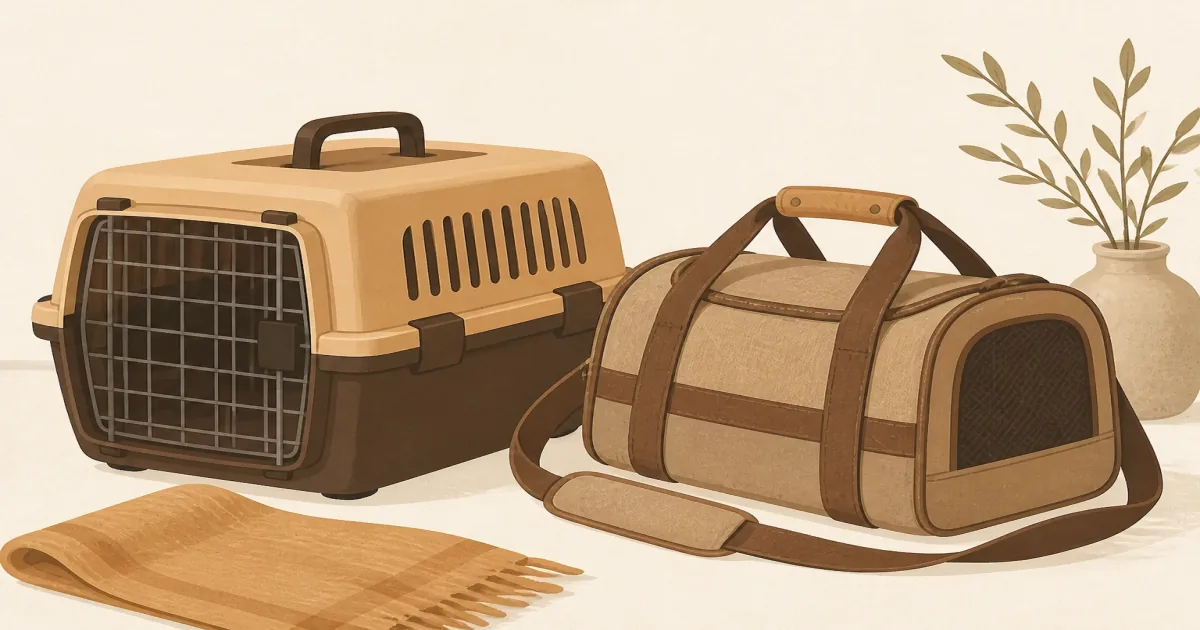
Best Cat Carrier (2026): Hard Top-Load vs Soft Airline
Accessories
The best cat carrier depends on the trip. Choose a hard two-door Petmate for vet days and car rides, or a Sherpa soft-sided carrier when you need under-seat cabin space.
Our picks
Cats do not love travel gear. The best cat carrier is the one you can load without a chase, then wipe or wash after the inevitable accident. Choose hard plastic when you need structure and easy cleaning. Choose a soft bag when airlines care about under-seat height more than shell strength.
Keep a familiar towel from home inside the carrier so the first smell is not new plastic. Pair travel days with a calm litter routine at home using an automatic litter box so the cat is not already stressed before the car door opens.
Travel gear shares a home with the rest of the everyday extras in the pet gear.
Hard carrier: Petmate two-door top load
A hard top-load kennel is the better carrier for the vet and for car rides. It wipes clean, it holds its shape when a cat braces, and the top door lets you lower the cat in instead of pushing against locked legs.
Why the top door matters more than the color
A cat that fights a front door will walk down through an open top. That is the difference between a two-minute load and a wrestling match in the driveway. The front door still helps for exams, when a tech wants quick access on the table.
What the 19-inch interior really fits
The Petmate 19-inch lists an interior of 16.75 inches long, 11 inches wide, and 9.25 inches high, which suits many small to medium cats and small dogs up to the listed weight. A tall or long cat needs the 24-inch box, which measures 21 inches long, 14.5 inches wide, and 13.5 inches high. Measure your cat sitting up, because head height is what rules out a shell.
Soft airline: Sherpa Original Deluxe
A soft-sided bag that compresses is the better carrier for a cabin flight. The Petmate above is a car and vet tool, not an under-seat bag, so if you are flying, switch to a soft carrier sized to your airline's under-seat box.
How the spring-wire frame fits a seat
The Sherpa Original Deluxe uses a spring-wire frame that lets the rear of the bag be pushed down several inches, so it slides under the seat without pressing on the cat's head. The top and side zippers both open, and both lock, which slows a cat that paws at the opening.
Which size to buy for a cat
The small Sherpa measures about 15 by 10 by 8.5 inches and is rated to 8 pounds. The medium covers most cats and lists around $61, with the small near $50. If your cat sits near the top of a size, go up a size rather than down: the liner pad eats interior space once it is in, and a carrier that looks snug at the store gets tighter on the flight.
How do the two carriers compare by the numbers?
Use the interior size and the trip type, not the photo on the box. The hard shell is a car and vet tool. The soft bag is a cabin tool.
If you are deciding by job rather than by size, the table below makes the choice quick.
How do you load a cat without a chase?
Leave the carrier out in the room for several days with a familiar towel and a few treats inside, and load from the top. A carrier that has been part of the room for a week feels like a den instead of a trap, and that is the part that matters most.
Slow down at the door
Do not tilt the cat headfirst into the box. Set the carrier on a table so the opening is at chest height, and lower the cat back feet first through the open top. If the cat freezes, stop, let it stand on the floor, and try again in a minute rather than forcing the rest of the way.
Make the car ride boring
Cover part of a hard kennel with a light towel in the car so passing motion feels less intense, and crack a window for air. A quick errand loop before the real appointment teaches the cat that the carrier is not always a vet trip.
What should you pack for the trip?
Pack an absorbent pad, a spare towel, and a collapsible bowl for a long drive. Add a harness and leash if you might stop somewhere safe for a bathroom break, because opening the car door beside a strange parking lot is not the moment to find out your cat has no leash training.
Long drives and the litter question
On a drive longer than a few hours, line the carrier with an absorbent pad and offer a shallow, familiar litter pan at a rest stop with the doors closed. Do not rely on an outdoor cat house as travel gear. That is a yard product, not a car product.
When is a backpack the better choice?
If your main job is sidewalks, trains, and short errands with both hands free, read the best cat carrier backpack guide instead. Backpacks ventilate differently and load differently, and they are not a swap for a hard top-load kennel at the vet, when the tech needs quick access on a table.
Bottom line
Own the Petmate two-door hard kennel for everyday vet and car trips, and the Sherpa Original Deluxe when cabin under-seat rules decide the purchase. Cross-link a backpack only when hands-free carrying is the real job. Measure the interior, not the exterior, confirm your airline's under-seat size, and practice the top-load once before the appointment morning.
Frequently Asked Questions
What is the best cat carrier for most homes?
Buy the Petmate Two Door Plastic Pet Kennel for Small Dogs and Cats, 19in, White for vet and car trips. Choose the Sherpa Original Deluxe Travel Pet Carrier, Airline Approved & Guaranteed On Board - Black, Medium when you need a soft under-seat cabin bag.
Hard carrier or soft carrier?
Hard shells wipe clean and feel secure in cars. Soft carriers fit under airplane seats and fold for storage. Many owners keep one of each.
When is a backpack better?
Hands-free city walks and short transit rides favor a cat carrier backpack. Vet exams still go smoother in a hard top-load box.
How do I measure for fit?
Measure length from nose to base of tail and height at the ears while sitting. The cat should turn around without jamming against the door. Compare the interior size, not the outside dimensions.
Are these airline approved?
Soft Sherpa sizes are widely used for cabin travel, but every airline publishes its own under-seat dimensions. Confirm before you book. Hard kennels are more often cargo or car tools.
How do I get a scared cat into a carrier?
Leave the carrier out as furniture for a week with a familiar towel inside. Use the top door on hard kennels so you are not pushing against a braced cat.
Can two cats share one carrier?
Usually no. Crowding raises stress and heat. Use separate carriers sized for each cat.
What else should I pack?
Absorbent pad, spare towel, water bowl for long drives, and a harness if you might need a secure bathroom break outdoors.
What cat carriers do vets recommend?
Vets tend to favor a carrier with a top opening, because it lets you lower a nervous cat in instead of pushing it through a front door. Size matters too. The cat should stand and turn without crouching against the lid.
Do cats prefer hard or soft carriers?
It depends on the cat. A hard shell feels more secure and wipes clean after an accident. A soft carrier is lighter, folds for storage, and fits under an airline seat. Many homes keep one of each.
What type of carrier is best for a cat?
The one you can load without a chase. For vet trips, a hard top-load kennel. For cabin travel, a soft under-seat bag. For hands-free errands, a backpack carrier, which is a different job again.
Which airline has the most lenient pet policy?
There is no single winner, because rules change by airline and aircraft. Check the under-seat dimensions for your specific flight and confirm the pet fee before you book. Soft carriers that compress are easier to fit than a rigid kennel.