Best Cat Harness (2026): Escape-Proof Fits That Stay On
Accessories
The best cat harness is the one your cat cannot reverse out of in the first week of training. Start with a snug step-in vest, then move to a lighter strap harness only if your cat stays calm on short leash sessions.
Our picks
The best cat harness for most first-time walkers is a snug step-in vest like the Voyager set, not a loose strap kit you hope will “break in.” If your cat is on the big side, the cat harness for large cats guide covers XL fits that span the chest. Browse the everyday accessories for carriers and enrichment, and see the litter mat pillar when indoor setup still needs floor protection.
A good cat harness has one job: keep a curious cat connected while you stay calm enough to enjoy the outing. Cute prints do not matter if the harness slips over the shoulders the first time your cat backs up. Measure the chest behind the front legs. Order from the size chart, not from “small cat” vibes.
For travel days when you need a closed space, switch to a cat carrier backpack instead of forcing a long leash walk. Indoor enrichment like a cat tree or window perch covers a lot of “outside watching” without opening the front door.
Which cat harness style fits your cat?
Match the harness to your cat's temperament and escape history, not to a photo. A cat that fights the head opening does best with a step-in vest. A calm cat that overheats in fabric does fine with a strap harness. First-timers and known escape artists get the most margin from a full vest.
Vest harnesses
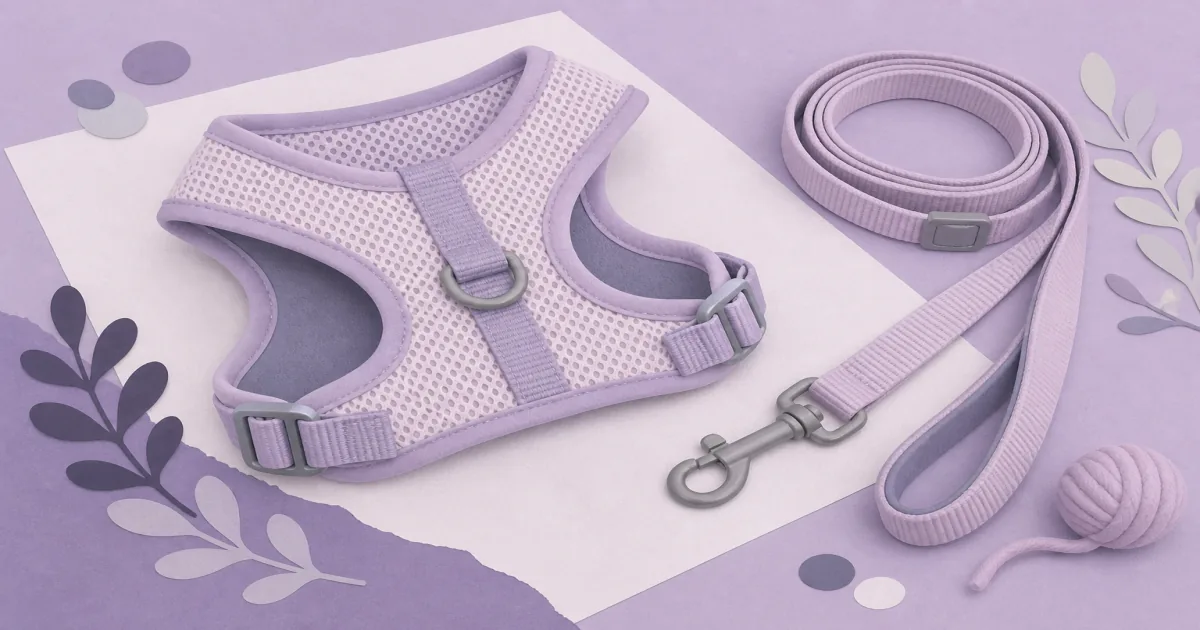
A vest spans the chest and shoulders, so leash pressure lands across the body instead of the throat. That coverage is why vests are the default for a cat that has already backed out of something thinner. The catch is warmth: more fabric means a cat in a hot climate may fight it. The Voyager and HEYWEAN picks are both step-in vests in this style, and the HEYWEAN weighs under 50 grams once it is on.
Strap harnesses
A strap harness uses thin webbing, often with a martingale loop across the shoulders. It breathes well and suits a cat that hates bulk. It gives a flexible cat more room to reverse out, so reserve it for a calm walker who already accepts short leash sessions indoors. The PetSafe Come with Me Kitty is the strap pick here.
Step-in harnesses
A step-in harness opens flat on the floor, so you set the cat's paws in and clip across the back instead of pulling anything over the head. That is the whole reason a head-shy cat tolerates it. Chest measurement still decides the size, so measure before you order.
Step-in vests wrap more of the torso, which is why they are the default for escape-prone cats. Strap harnesses keep less fabric on the body and suit cats that overheat or hate jackets. Neither design replaces a snug fit.
If you already shop dog walking gear, remember a no-pull dog harness is built for a different body and a different pull style. Cat harnesses keep pressure off the throat and leave less room to reverse out.
How do you measure a cat for a harness?
Wrap a soft tape around the deepest part of the chest, just behind the front legs, and write that number down. Then check the neck opening against the size chart so the harness cannot slide forward over the ears. Chest girth, not body weight, decides the size.
Where the tape goes
Measure the chest at its widest point, the neck at the base where a collar sits, and the head at its widest so the opening can still pass over. The size chart for the Voyager, HEYWEAN, and PetSafe is a chest measurement, which is why a letter size alone misleads. Order the size that closes with room to tighten. For scale, a 14-pound cat fit a small Voyager in our own fit check.
If your cat is between sizes
Size up on the chest, not down on the letter. A too-small vest leaves the neckline wide, and that wide neckline is exactly the gap a cat uses to reverse out. If your cat is fluffy, press the fur down lightly when you measure, so you size the body instead of the coat.
Top pick: Voyager Escape-Proof Step-in
The Voyager Escape-Proof Step-in Cat Harness & Leash - Black, Small is the best cat harness for most households starting supervised outdoor time. The step-in mesh locks around the chest, the reflective stitching helps at dusk, and the included leash means you are not piecing a kit together from three listings.
Why the step-in shape helps a nervous cat
You never pull anything over the head, so a cat that ducks away from overhead gear stays calmer. The buckles sit across the back where you can reach them while the cat faces forward. That is the difference between a two-minute dress and a chase.
Use it for short patio sessions and quiet sidewalk practice. Skip it only if your cat refuses any vest-style wrap and stays calm in a strap harness during indoor practice.
Value pick: HEYWEAN step-in vest
The HEYWEAN Cat Harness and Leash, Ultra Light Escape-Proof Step-In Vest is the value pick when you want the same step-in idea without spending like an adventure brand. The soft mesh and triple-lock closure are easy for hallway practice. You still need honest sizing. A bargain harness that is two sizes too large will not stay on.
The closure matters more than the fabric
Count the steps it takes to open the harness, because that is what slows a determined cat. The HEYWEAN needs a hook-and-loop flap, a buckle, and the D-rings moved before it opens. A single-clip budget harness is faster for you and faster for a cat on the way out.
Strap pick: PetSafe Come with Me Kitty
The PetSafe Come with Me Kitty Harness and Bungee Cat Leash, Royal Blue, Small is the pick when airflow matters more than vest coverage. The H-style straps apply pressure across the shoulders instead of the throat, and the bungee leash softens sudden stops when your cat darts toward a leaf.
How the bungee leash behaves
The stretch is small, so it takes the snap out of a short lunge without letting the cat reach the end of a taut line. Keep a hand near the clip on the first few sessions. This is a better match for cats that already accept short leash sessions and hate bulky fabric. It is not the first choice for a cat that reverse-escapes every loose wrap in the house.
What are the most common fit mistakes?
Ordering by weight instead of chest girth is the first one, and skipping indoor wear time is the second. Most “escape artist” cats were never fitted properly, never practiced indoors, or both. Fix the fit and the routine before you blame the harness or buy a different one.
- Ordering by weight alone. Chest girth is the measurement that matters.
- Skipping indoor wear time. Outdoor panic starts with a brand-new harness on day one.
- Leaving two fingers of slack and calling it done. Re-check after five minutes of walking. Fabric settles.
- Clipping to a collar. Collars are not walking anchors for cats.
- Treating the leash like a dog walk. Follow the cat. Do not drag.
How long does it take a cat to accept a harness?
Give it one to two weeks of short sessions. Day one is sniffing only, day two is a 30-second wear session with treats, and day three adds a minute of walking around one room. Attach the leash only after the cat moves normally in the harness.
Put the harness on, wait two minutes, and check the fit again. Cats shift and straps migrate. A fit that looked perfect on the couch can loosen after a few steps. Outdoor time should start boring on purpose. A quiet patio beats a busy sidewalk, and letting the cat set the pace keeps the harness from becoming a fear cue.
Carry a soft towel or a small carrier for the walk home if your cat melts down. Ending early is not failure.
Who should skip a walking harness?
Skip a harness if your cat freezes or panics after several short indoor sessions, if your only outdoor plan is a crowded street, or if you need secure transit more than exploration. A carrier is the calmer tool for those days.
Multi-cat homes should harness one cat at a time at first. A second cat bolting past the door turns a training session into a chase. Keep the non-walking cats closed in another room until the harnessed cat is back inside and unclipped.
Bottom line
Start with the Voyager Escape-Proof Step-in Cat Harness & Leash - Black, Small for a secure first vest. Move to the HEYWEAN Cat Harness and Leash, Ultra Light Escape-Proof Step-In Vest when you want the same idea on a tighter budget. Choose the PetSafe Come with Me Kitty Harness and Bungee Cat Leash, Royal Blue, Small when a lighter strap harness fits your cat better than a wrap. More walking and carrier gear lives on the blog and homepage.
Frequently Asked Questions
What is the best cat harness for most cats?
For most cats starting outdoor leash time, a snug step-in vest is the safer default. The Voyager Escape-Proof Step-in Cat Harness & Leash is the top pick here because the wrap fit is harder to reverse out of than a loose strap set.
Are any cat harnesses truly escape-proof?
No harness replaces supervision. Cats can reverse out of almost anything if the fit is loose. Measure the chest, keep only one or two fingers of space under the straps, and practice indoors before you open a door.
How do I measure a cat for a harness?
Use a soft tape around the deepest part of the chest, just behind the front legs. Write that number down, then check the neck opening on the size chart so the harness cannot slip forward over the ears. Compress thick fur lightly.
Should I use a harness or a cat carrier backpack?
Use a harness for short supervised walks and patio time. Use a cat carrier backpack for transit, vet trips, and crowded sidewalks where you need a closed space.
How do I introduce a cat harness?
Leave it out for sniffing, then do 30-second wear sessions with treats. Add the leash only after your cat can walk around the room without freezing. Rushing this step is how harnesses end up in a drawer.
Is an H-style strap harness safer than a vest?
Strap harnesses breathe better and suit cats that hate bulk. Vests usually feel more secure for first-time outdoor cats. Pick based on temperament, not the photo.
Can I use a dog harness on a cat?
Sometimes a small dog vest works, but cat-specific patterns fit the chest and neck better. If the harness rides up toward the ears or leaves a big gap behind the front legs, skip it.
Where should the leash clip sit?
Between the shoulder blades on the back. A throat clip or dangling front clip is a bad match for feline anatomy.
How long does it take a cat to accept a harness?
Plan on one to two weeks of short sessions. Day one is sniffing only, then 30-second wear sessions with treats, then a minute of walking in one room before you attach the leash.
Do multi-cat homes need more than one harness?
Train one cat at a time. A second cat bolting past the door turns practice into a chase. Keep non-walking cats closed in another room until the harnessed cat is back inside.
What cat harness is recommended by veterinarians?
Vets tend to recommend a harness with more contact area and good adjustability, because those traits reduce escape risk without putting pressure on the throat. A snug step-in vest or a martingale strap harness both fit that description when they are sized correctly.
What is the best full body harness for cats?
A full body vest that spans the chest and shoulders is the best choice for a cat that backs out of thinner harnesses. The Voyager step-in vest is the top pick here for that reason. For a large cat, move up to a size that reaches the chest measurement, not the letter on the old harness.