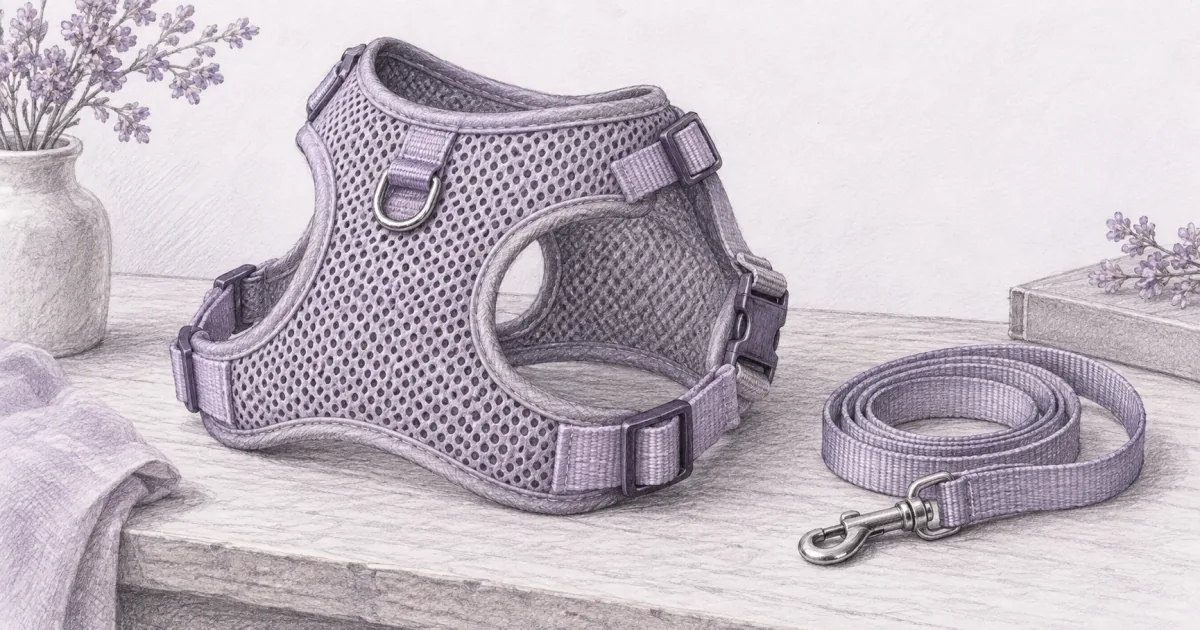
Best Cat Harness for Large Cats (2026): XL Fits That Do Not Slip
Accessories
A big cat needs more than a smaller harness on a bigger setting. Measure the chest, check the neck opening, and start with a vest that spans the whole torso before you open the door.
Our picks
A big cat needs a harness built for its body, not a smaller harness cinched all the way down. The straps on a too-small vest leave a wide neck opening, and that is exactly the gap a cat uses to reverse out. Start with the chest measurement, then pick a vest that covers the torso instead of a thin strap set.
This guide is for the size tail, so start with the general cat harness guide if you are new to harness training. For transit and vet days, a cat carrier backpack is the better tool. More walking gear lives in the accessories section.
Why a standard cat harness slips off a big cat
Cats have free-floating collarbones and very flexible spines, so they can shrink and rotate their shoulders in ways a dog cannot. When a cat backs up and the leash pulls forward, those two motions open the harness. A large cat has more body to move, so a loose strap gives it more room to work.
A too-small vest is the other failure. Owners often size down because the cat looks slim, then the neck opening sits wide and the cat walks out of it. The fix is a vest sized to the chest, with a neck strap that stays snug after the cat moves around.
How to measure a large cat for a harness
Use a soft tape. Wrap it around the deepest part of the chest, just behind the front legs. Write that number down. Then measure the neck at the base, where a collar would sit, and the head at its widest point so you know the opening can still pass over.
If your cat is fluffy, press the fur down lightly. Sizing for the fluff leaves a harness that looks snug in a photo and loose on the body. When you are between sizes, pick the size that closes with room to tighten, not the one that only closes when you pull hard.
Put the harness on, wait two minutes, and check it again. Cats shift, and straps migrate. A fit that looked right on the couch can loosen after a few steps.
Best overall: rabbitgoo escape-proof vest for large cats
The rabbitgoo Cat Harness and Leash Set, Escape Proof Vest in the large-to-XL size is the best cat harness for a big cat that has beaten other harnesses. The chest spans 21 to 25 inches and the neck 15 to 19 inches, which covers most cats in the 14 to 20 pound range.
The vest design is the reason it works. Leash pressure lands on the chest, not the throat, and the dual buckles keep the closure secure. The reflective trim helps when a dark-coated cat walks at dusk. The included 4.9-foot leash means you are not buying gear twice.
No vest is truly escape proof. If the neckline is loose, even this one can be beaten. Fit it snug, then test it indoors before you trust it outside.
Budget XL: Wanheart mesh harness
The Wanheart Cat Chest Harness and Leash in XL is the value pick for cats in the 16.5 to 22 pound range. It weighs only about 100 grams, so a large cat is not hauling around extra gear. The breathable mesh keeps it cool for warm-weather walks, and the adjustable straps give a broad chest room to fit.
Choose it when you want a light harness for short outdoor sessions and you are willing to measure carefully. It is not the harness for a cat that has already escaped a vest, because the lighter structure gives a determined cat more to work with.
Wide-coverage alternative: pangdi XL vest
The pangdi Cat Harness and Leash Set in XL is the pick for a deep-chested cat that needs the vest to sit across more of the body. The wide panels and fully adjustable straps dial in a snug fit, and the quick-release buckles allow fast on and off at the door.
It suits a cat that walks calmly and hates the fuss of a four-point vest. For a known escape artist, the rabbitgoo still has the edge because its neck adjustment is the more secure starting point.
Vest vs strap vs step-in for big cats
Vests cover the most body, which is why they are the default for a large cat. Step-in designs skip the overhead fit, so a head-shy cat cooperates more. Thin strap harnesses breathe best, but they give a big, flexible cat more room to back out. Pick for temperament, not for the photo.
Training a large cat to wear a harness
Day one is sniffing only. Leave the harness near a favorite perch or the food bowl. Day two is a 30-second wear session with treats. Day three adds a minute of walking around one room. Attach the leash only after the cat moves normally in the harness.
Keep the first outdoor session boring on purpose. A quiet patio beats a busy sidewalk. Let the cat set the pace, and end the session if it freezes or backs toward the harness opening. Carry a carrier or a towel for the walk home so a meltdown does not turn the harness into a fear cue.
Recheck the fit after five minutes. Cats settle into a harness and the straps shift. A quick tighten outdoors is better than a walk with a loose neckline.
When a harness is not the right tool
Skip the harness if your cat panics after several short indoor sessions, or if your only plan is a crowded street. A carrier is calmer for those days. Skip it too if you need secure transit rather than exploration, because a harness is not a restraint for a car ride.
For a cat that wants to watch the world without going outside, a cat tree or window perch covers a lot of that urge. A harness is for supervised outdoor time, not a substitute for a secure carrier.
Bottom line
Start with the rabbitgoo Cat Harness and Leash Set, Escape Proof Vest for a big cat that needs a secure vest with a chest that reaches 25 inches. Choose the Wanheart Cat Chest Harness and Leash for a light, budget XL with an honest measuring chart. Choose the pangdi Cat Harness and Leash Set when you want wider vest panels on a deep chest. Measure the chest, snug the neckline, and practice indoors before you open the door.
Frequently Asked Questions
What is the best cat harness for a large cat?
A vest harness with an adjustable neck and chest is the best starting point for a big cat. The rabbitgoo Escape Proof Vest in its large-to-XL size is the top pick here because it spans the chest and keeps leash pressure off the throat.
Why does my large cat keep escaping the harness?
The fit is usually the reason. A loose neckline is the main escape point, because a cat narrows its shoulders and reverses while the leash pulls forward. Tighten the neck strap, keep only a finger of space, and tighten again after five minutes of walking.
How do I measure a large cat for a harness?
Use a soft tape around the deepest part of the chest, just behind the front legs, and around the base of the neck. Compress thick fur lightly so you measure the body, not the fluff. Check the head circumference too, since a harness has to slip on without being so big it slides off.
Are any cat harnesses truly escape proof?
No harness is fully escape proof. The label describes a design that resists backing out when it fits correctly. Big cats are strong enough to test any vest, so pair a snug harness with indoor practice and supervision.
What type of harness do cats prefer?
Most cats do better with a soft vest than a thin strap set, especially for early outdoor sessions. Step-in and vest styles spread pressure and feel less like a collar. A light mesh strap harness can work for a calm cat that hates fabric.
Can a large cat wear a small dog harness?
Sometimes, and some big cats fit dog harnesses better than cat gear. The harness still has to fit the chest and leave room at the shoulders. If it rides up toward the ears or leaves a gap behind the front legs, it is the wrong shape.
Where should the leash clip sit on a large cat?
On the back, between the shoulder blades. A throat clip or a low front clip does not match feline anatomy and can twist the harness when the cat pulls.
How long does it take a cat to accept a harness?
Give it one to two weeks of short sessions. Let the cat sniff the harness, then do 30-second wear sessions with treats, then a minute of walking in one room. Attach the leash inside before you try the door.