Best Dog GPS Tracker (2026): Live Location, Subscription, and Battery Truth
Accessories
A GPS tracker cannot stop a dog from getting loose. It can give you a moving location quickly, as long as you accept the monthly plan and charge it on a schedule. The Life360 Pet GPS Tracker is the pick here; a Bluetooth tag is not.
Our picks
A tracker is not a replacement for a leash, a fence, or recall training. It is a backup for the bad five minutes when a gate is open or a clip slips. Cellular live tracking can follow a running dog across town, and a Bluetooth tag cannot. Treat the monthly plan as part of the price, because a tracker with a lapsed plan is just extra weight on a collar.
Trackers sit with the rest of the wearables in the accessories section. For drives, pair one with a contained seat in our best dog car seat guide, and for the house, a pet camera shows whether a dog is pacing near the door.
How do the tracking types compare?
Cellular trackers are the only type that follows a dog past your own Bluetooth range, and they are the only type with a monthly bill. Radio trackers skip the fee but need a handheld, and Bluetooth tags are for keys, not for a dog that runs.
The trade is simple. You pay monthly for range you can follow in real time. A radio kit is a one-time buy but only works while you point the handheld at the dog, and a Bluetooth tag only pings while a phone is close.
Why a Bluetooth tag is a poor fit for a dog
A tag rides a crowd network of phones, so it reports where a stranger's phone happened to pass, not a live path. That is fine for a suitcase. It is not fine for a dog heading toward a road. If your dog is a known door-dasher, pay for cellular.
Our pick: Life360 Pet GPS Tracker
The Life360 Pet GPS Tracker is the pick for dogs over about eight pounds and anyone who wants a live map plus a safe-zone alert. It uses a mix of cellular, GPS, Wi-Fi, and Bluetooth, and it updates as often as every 2 to 4 seconds when the dog is away from home. That fast update rate is what makes a tracker useful. A dot that refreshes once a minute only shows you where the dog was two streets ago.
The app is where the tracker lives. You set a home geofence, add places for a sitter or a daycare, and turn on escape alerts so the whole family gets pinged at once. The tracker also carries a light and a speaker, which is the feature you use most in the first ten minutes of a search.
How the device fits a collar
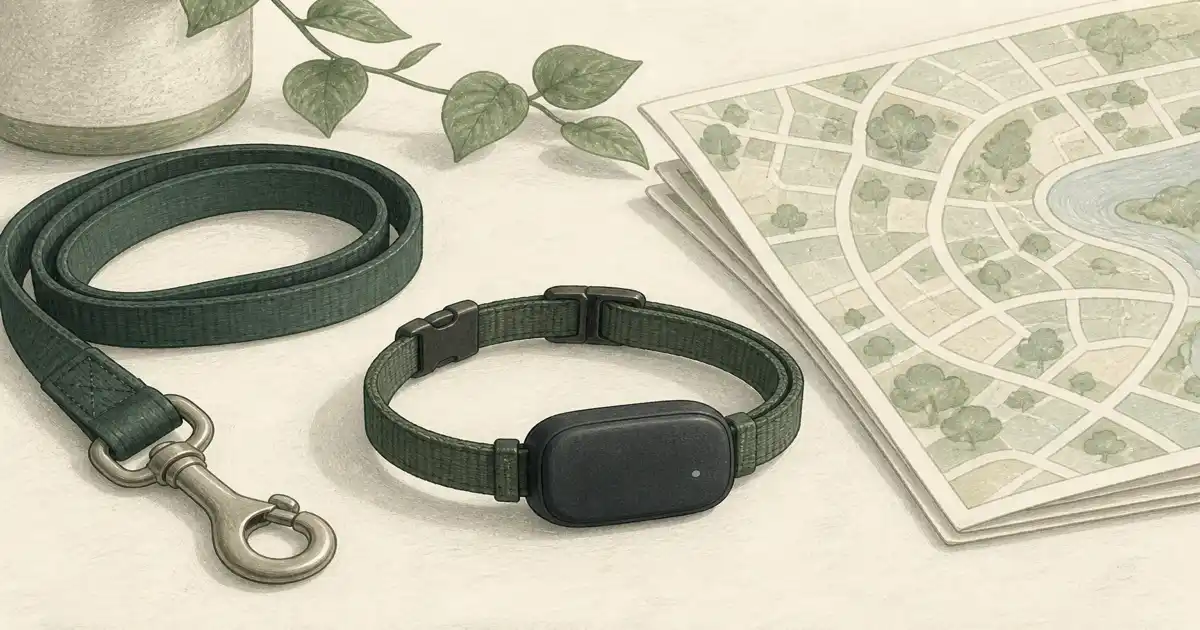
The tracker fits collars up to 1 inch wide and weighs about 34 grams, so a small dog notices it less than you would expect. Slide it onto a flat everyday collar and check the attachment after a rough play session. A perfect location does not help if the collar is hanging on a branch.
How the battery behaves
Life360 rates the battery up to 14 days in everyday use, then Bluetooth reserve keeps the pet findable on the Tile network for up to 6 more months. Turn on Beast Mode for a known escape artist and the update rate climbs, which cuts the charge to about 3 to 5 days. In one road test, live tracking away from home Wi-Fi pulled the battery from full to 10% in roughly three days. Charge it on a fixed day each week and keep the cable near the leash.
What does the Life360 tracker cost to own over three years?
The device is the cheap part. Here is the arithmetic a buyer should run before checkout, using the list price and the published plan rate.
A radio tracker with no fee looks cheaper on paper, but it only works while you carry the handheld and point it at the dog. If your worst case is a dog loose in town, the cellular plan can pay for itself in a single scare. If your worst case is a dog off-leash on a remote trail, the radio kit is the better tool and the plan is wasted money.
How do you set up the tracker so it actually helps?
Buy the plan first, then pair the device on Wi-Fi at home before you ever need it, and walk one test lap with live tracking on. A five-minute practice walk on your own street is worth more than a product photo, because it shows you the update delay on your carrier in your neighborhood.
Set the home zone larger than the house
Drag the home geofence a few feet past each exterior wall. A boundary that sits on the wall will trip on GPS drift while the dog sleeps on the couch, and a tracker that cries wolf gets ignored by the second week. Add a second zone for the sitter's place and a third for daycare.
Test the alert once, on purpose
Have one family member walk the dog a step past the boundary and confirm every phone in the circle gets the alert. Then check that the notification is not buried under silent alerts. A good escape alert is one you notice on a locked screen.
Where will a tracker fail you?
It fails where there is no cell signal, and it fails on a dead battery. Canyons, thick woods, and remote roads can make any cellular tracker slow or silent, and a device at 0% is a paperweight until it charges. That is why the ID tag and the microchip stay on the dog no matter how good the tracker is.
It also fails if you stop paying. A tracker without an active plan cannot report a location, so cancel only if you have another plan for finding the dog. For a dog that mostly rides in the car, a dog seat belt and a contained booster do more good than a tracker.
Bottom line
The Life360 Pet GPS Tracker is the best dog GPS tracker for live location and escape alerts, as long as you budget the membership and charge it weekly. Confirm cell coverage where your dog actually goes, keep an ID tag on the collar beside the tracker, and treat the device as a backup for the bad five minutes rather than a fence you never have to build.
Frequently Asked Questions
What is the best dog GPS tracker for most dogs?
The Life360 Pet GPS Tracker is the pick here for live location and escape alerts. It fits collars up to 1 inch, updates as often as every 2 to 4 seconds away from home, and keeps a battery reserve that stays findable after the charge runs out.
Do dog GPS trackers need a subscription?
Cellular trackers do. The device sends its location over a mobile network, so it needs an active plan. Life360 bundles tracking into its Gold and Platinum memberships, and the tracker includes 12 months for new members.
How much does a dog GPS tracker cost per year?
Budget for the plan, not just the device. Life360 Gold runs about $16.99 a month with an annual commitment, and the device is about $99. Run that over three years and the plan is the larger cost by a wide margin.
How long does the battery actually last?
Up to 14 days in everyday homebody use, but closer to 3 to 5 days in Beast Mode, and faster again when the dog is away from home Wi-Fi. A real-world test dropped from full to 10% in about three days on the road.
Will a GPS tracker work in the woods?
Only where there is cell coverage. Check your carrier signal at the trailhead you actually use, and download an offline map before a long trip. For true off-grid trails, a radio tracker with a handheld is the better tool.
Should I put a tracker on a collar or a harness?
Put it on a well-fitted everyday collar unless the maker says otherwise. Check the attachment after rough play, and keep the device on the collar, not on a walking harness you take off at home.
Can I set a safe zone around my home?
Yes. Make the home zone a little larger than the building so GPS drift does not set off false alarms while the dog sleeps on the couch. You can add zones for a sitter or a daycare too.
What happens when the tracker battery dies?
Life360 switches to Bluetooth reserve mode and stays findable on the Tile network for up to 6 more months, but only near people running that network. It is a backup, not a live map.