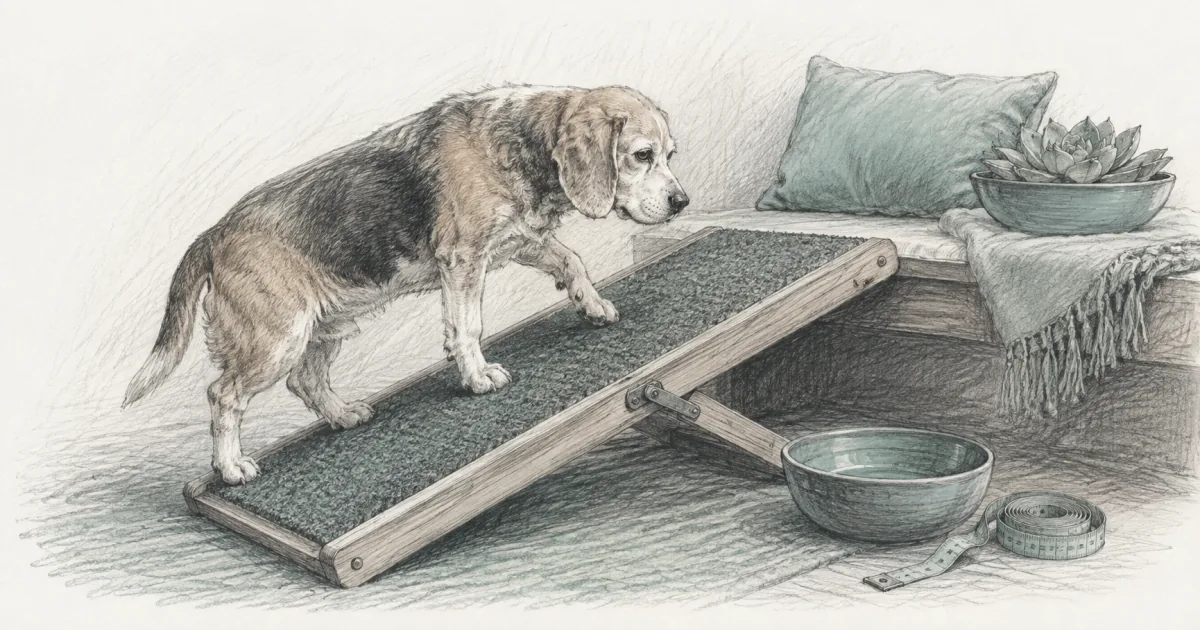
Best Dog Ramp (2026): Bed vs Car-SUV Picks for Joint-Friendly Access
Beds and crates
The best dog ramp matches the climb the dog actually faces. Start with the CozyUp furniture ramp for beds, then pick the Happy Ride folding ramp for SUVs and trucks.
Our picks
A dog ramp fails in two ways. It is too short and the slope is so steep the dog hesitates and decides to jump anyway, or it is too narrow and the dog slips off the edge on the first walk up. The fix is matching the ramp to the actual climb and the dog’s confidence on the surface.
Browse more rest and access gear in beds and crates. For full setup advice and slope math, see how to choose a dog ramp for bed. For stairs that fit tighter bedrooms, see best dog stairs. For the crate side of the rest setup, see best dog crate.
Bed ramp vs car ramp
Wood furniture ramps win on stability, looks, and gentle slope for everyday bedroom climbs.
Folding car ramps win on portability, weight, and side rails for SUV and truck cargo areas.
PetSafe CozyUp Bed Ramp: top pick for bedroom climbs
The PetSafe CozyUp Bed Ramp for Dogs and Cats is the best dog ramp when the climb happens every night on the way to bed or every morning on the way down. The 70-inch length creates a gentle slope that suits senior dogs, deep-chested breeds, and any dog that has started hesitating at the bedroom jump. The cherry or white wood finish looks like part of the bedroom, not a piece of pet gear that you want to hide.
The high-traction carpet surface holds paws on the climb up and the descent down. The 120-pound weight rating fits medium and large dogs, including most labs, shepherds, and small mastiffs. Assembly is simple and the ramp is solid once the bolts are snug.
Skip the CozyUp if the bedroom is tight on floor depth. A 70-inch ramp needs about 6 feet of clear floor to lay out at the bed. If the bedroom is small, compare the folding stairs in best dog stairs instead.
PetSafe Happy Ride Folding Ramp: best for SUVs and trucks
The PetSafe Happy Ride Folding Dog Ramp is the move when the dog rides in an SUV or truck. The 62-inch length fits the cargo area of most SUVs, and the ramp folds in half for trunk storage between trips. Side rails help nervous dogs stay centered on the way up.
The ramp weighs 10 pounds, which one person can lift into the trunk. The non-slip walking surface holds paws on wet days. The 150-pound weight rating covers large breeds. A safety release latch keeps the ramp folded during travel.
Skip the Happy Ride for furniture climbs. The 62-inch length creates a steeper slope than the 70-inch CozyUp, and the aluminum surface is not the soft carpet feel most dogs prefer on a daily bedroom climb. Use it for road trips and vet visits, and pair it with a CozyUp at home.
Slope, length, and weight rating
Slope matters more than weight rating when choosing a ramp. A 28-inch bed climb on a 62-inch ramp creates an angle of about 27 degrees, which most senior dogs find steep. The same 28-inch bed climb on a 70-inch ramp creates an angle of about 23 degrees, which feels easier. For bedroom climbs, longer is gentler.
Weight rating is the safety margin. Buy a ramp rated for at least double the dog’s weight. A 50-pound dog on a 100-pound-rated ramp is safer than the same dog on a 60-pound-rated ramp. Both CozyUp and Happy Ride exceed 100 pounds, so the weight margin is fine for most breeds.
For full setup advice and how to train a hesitant dog to use a ramp, see how to choose a dog ramp for bed.
Where and how to place a dog ramp
Place the ramp where the dog already tries to climb. If the dog jumps on the bed from the side, put the ramp at the same side. Training against habit fails. Park the ramp with the top end resting on the mattress or the cargo lip and the bottom end on a non-slip surface.
A rug or non-slip mat under the bottom end makes a big difference on hardwood and tile. A wooden furniture ramp like CozyUp does not slide as easily as a folding aluminum ramp because the wood frame sits flat. If the aluminum ramp walks across the floor on a hard lunge, add a thin mat under the base.
How to teach a dog to use a ramp
Start at the lowest angle on a flat floor. Place treats on the surface and let the dog investigate. Reward one paw, then two paws, then a few steps. Keep the first sessions short. Do not pull the dog up by the collar or carry them halfway and expect them to finish. That can make the ramp feel unstable.
Lay the ramp flat on the floor for a day or two so it becomes a familiar surface. Once the dog walks the full length easily, raise the height a little. Use the same cue each time, such as “up” or “bed.” Praise at the top, then practice the descent. Going down is often the harder part, especially for a senior dog.
If the dog will not step on the ramp at all, check pain, not stubbornness. A new reluctance to jump, limping, or stiffness after rest deserves a vet call. Pair the ramp with an orthopedic dog bed for resting comfort and ask your vet about stairs versus ramps for the dog’s specific joints.
Care and replacement signs
Wipe the carpet surface weekly with a damp cloth to remove dirt and loose fur. Vacuum the walking surface monthly. Check the bolts and the carpet attachment every few weeks. A loose bolt at the hinge is the most common failure on a folding aluminum ramp. Replace the ramp when the carpet wears thin, the wood frame wobbles, or the bolts will not hold tension.
For a bed ramp that lives in the bedroom, move it back into position after vacuuming the rug underneath. A sliding ramp that ends up two inches from the bed teaches the dog to jump the gap, which defeats the ramp.
When a ramp is the wrong tool
Skip a ramp if the dog has never tried to climb and the bed is too high for any ramp to fit. Skip if the dog is large enough that every mainstream ramp looks narrow. Skip if the dog slides or panics on the ramp instead of using it. A new reluctance to climb often points to pain, not a gear problem. Get professional advice on the right height and setup.
If the bed is very high, consider lowering the mattress or using a floor-level dog bed instead. A stable, easy option used every day is better than a tall ramp nobody trusts. For the floor-level option, see best orthopedic dog bed.
Bottom line
Buy the PetSafe CozyUp Bed Ramp for Dogs and Cats when the dog climbs onto a bed or couch every night and you want furniture-grade wood with a gentle 70-inch slope. Buy the PetSafe Happy Ride Folding Dog Ramp when the dog rides in an SUV or truck and needs a 62-inch ramp that folds into the trunk.
Measure the climb height, match the length to the slope, and place the ramp where the dog already climbs. For stairs that fit tight bedrooms, see best dog stairs. For full setup advice, see how to choose a dog ramp for bed.
Frequently Asked Questions
What is the best dog ramp for most homes?
Start with the PetSafe CozyUp Bed Ramp for Dogs and Cats when the dog climbs onto a bed or couch every night. Choose the PetSafe Happy Ride Folding Dog Ramp when the dog rides in an SUV or truck and needs help into the cargo area.
How long should a dog ramp be?
Longer ramps create a gentler slope. A 70-inch furniture ramp is the right pick for most beds and couches because it lets the dog walk up at an easy angle. A 62-inch car ramp fits SUVs and trucks but creates a steeper climb. Measure the climb height first.
Wood, aluminum, or plastic dog ramp?
Wood ramps look like furniture and stay put on carpets, but they are heavier and harder to move. Aluminum ramps fold for travel and stay light, but they can slide on smooth floors without a non-slip mat. Plastic ramps sit between the two on price and weight.
Bed ramp or dog stairs?
A ramp is easier on a senior dog that has trouble lifting each leg, but it needs more floor depth. Stairs fit tight bedrooms better and feel sturdier for confident climbers. Compare options in best dog stairs. For full setup advice, see how to choose a dog ramp for bed.
Will a ramp help an arthritic senior dog?
A gentle slope reduces the impact on joints compared with a jump, but a ramp is not a medical fix. A new reluctance to jump, limping, or stiffness after rest deserves a vet call. Pair the ramp with an orthopedic dog bed for resting comfort and ask your vet about stairs versus ramps for your dog’s specific joints.
How do I teach a dog to use a ramp?
Start at the lowest angle on a flat floor, place treats on the surface, and let the dog investigate. Reward one paw, then two paws, then a few steps. Do not pull the dog up by the collar. Going down is often the harder part, so practice descent as well.
How much weight should a dog ramp hold?
Buy a ramp with a weight rating at least double the dog’s weight for a comfortable margin. A 50-pound dog on a 100-pound-rated ramp is safer than the same dog on a 60-pound-rated ramp. Both CozyUp and Happy Ride exceed 100 pounds, which fits most breeds.
Should a dog ramp have side rails?
Side rails help nervous dogs stay centered on a wide ramp. They are not as critical on a narrow carpeted furniture ramp where the dog already trusts the surface.
Happy Ride includes side rails. CozyUp uses a wide wood frame that doubles as a visual edge.