Best Dog Leash for Large Dogs (2026): Rope, Traffic-Handle, and Bungee Picks
Accessories
A large dog can turn a calm walk into a tug of war in one step. Here are the rope, double-handle, and bungee leashes that hold up and stay comfortable on a big dog.
Our picks
The best dog leash for large dogs is the Taglory Rope Leash for most walks, because the climbing rope and padded handle stand up to a strong pull. A large dog can turn a calm walk into a tug of war in a single step. The wrong leash means a burned hand, a snapped clip, or a dog that gets loose near traffic. The right one absorbs the pull and stays comfortable.
The leash is one part of the walking setup. Our best dog leash guide covers everyday nylon and rope, and best retractable dog leash covers the cord style. For a strong dog that pulls, pair the leash with a best dog harness for large dogs. The rest of the walking gear sits in the pet accessories section.
What a large-dog leash has to handle
Start with the material. A big dog loads the leash far harder than a small one, so thin nylon and light clips are where failures happen. Look for webbing at least an inch wide or a half-inch climbing rope, and a metal clip that swivels so the leash does not twist.
Then think about the handle. A hard pull through a bare strap or rope burns the hand. A padded handle is not a luxury on a large dog. If your dog lunges, a second handle near the clip is more useful than padding alone.
Finally, decide how much control you need. A six-foot leash is the everyday standard. A bungee cushions a lunge but adds a few inches of stretch. A traffic handle gives you close control in a crowd. Match the leash to how your dog actually walks, not to how you hope it walks.
Best overall: Taglory Rope Leash
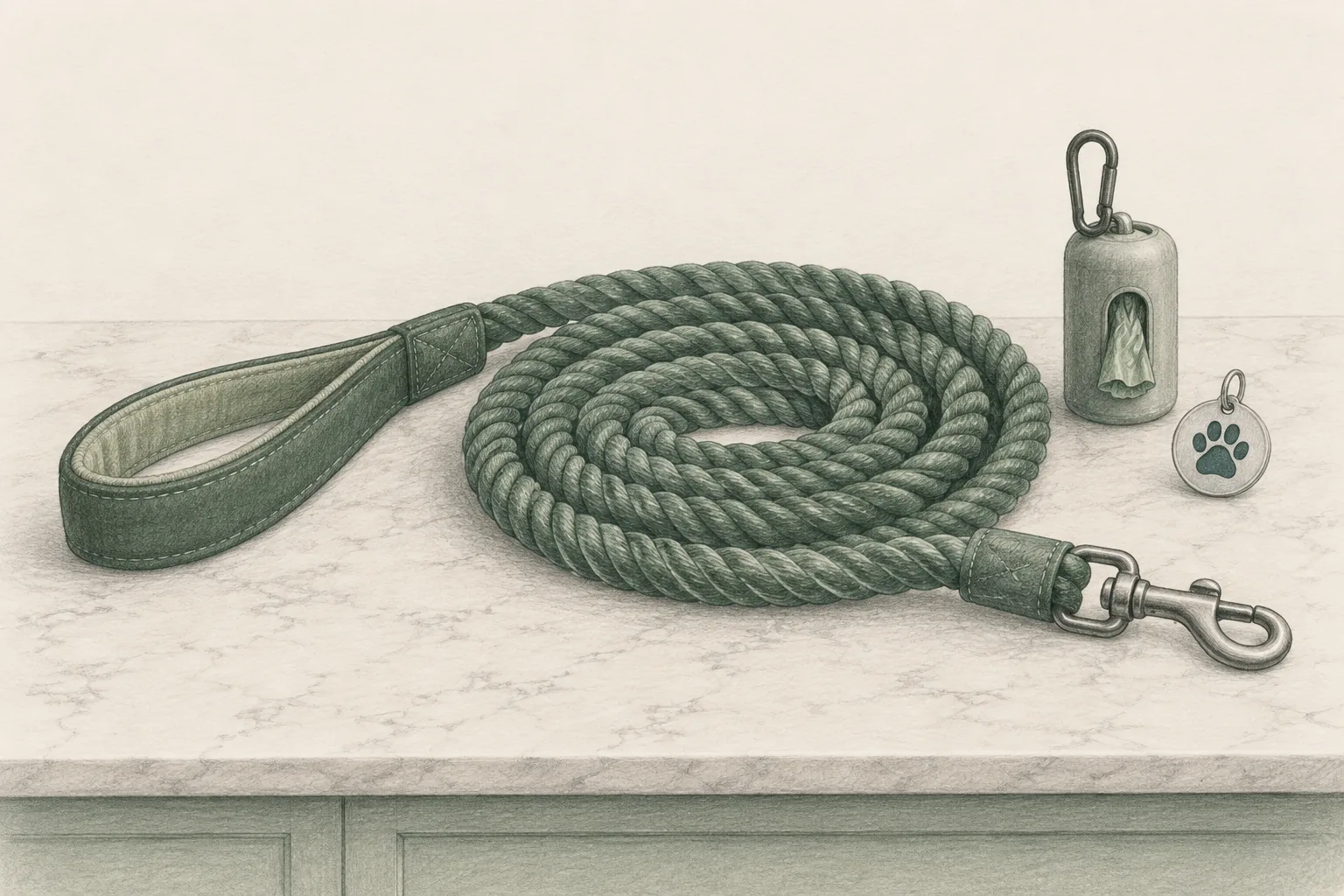
The Taglory Rope Dog Leash is the best pick for everyday walks with a large dog. The half-inch climbing rope is built for strong pullers, and the padded foam handle stops the rope burn that a bare strap causes. The metal clip swivels 360 degrees, so the leash does not tangle when the dog circles.
Reflective threads run through the full length of the rope, which keeps both of you visible on early and late walks. The six-foot length gives the dog room to sniff without letting it drift into the road.
Skip it if you want a traffic handle for close control. This rope leash has one handle, so a dog that lunges in a crowd is easier to manage on the double-handle Joytale instead.
Best for pullers: Joytale Double-Handle
The Joytale Dog Leash for Large Dogs that Pull is the pick when your dog lunges. The second handle sits near the clip, so you can hold the dog close at a crossing or when another dog passes, then go back to the long handle for the open stretch. That one feature does more for control than any amount of padding.
The webbing is one inch wide, thicker than a standard leash, and the reflective stitching runs on both sides for night walks. There is a D-ring near the handle for a poop-bag dispenser.
Choose it for a strong dog in a busy neighborhood. Skip it for a low-slung dog that would drag the traffic handle, or for a dog that walks calmly on a loose leash, where the simpler rope leash is enough.
Best shock absorption: Joytale Tactical Bungee
The Joytale Tactical Bungee Dog Leash is the pick for a dog that hits the end of the leash hard. The bungee section absorbs the kinetic energy of a lunge, which takes strain off your wrist and shoulder and softens the pull on the dog. It is rated for strong dogs up to about 200 pounds.
The auto-lock clip holds tight under load, and the two padded handles give you a relaxed grip and a close-control grip. The built-in seat-belt tab clips the dog in for the ride home, and reflective threads keep the leash visible at night.
Buy it for a powerful dog that lurches at squirrels or other dogs. Skip it if your dog needs tight, precise control, where the fixed-length nylon leash is the better tool.
Rope, nylon, or bungee?
Rope is the most comfortable and durable for everyday use, as long as you dry it straight. Nylon is lighter and cheaper, but it burns the hand under a hard pull unless it has a padded handle. A bungee is the specialist tool for a dog that lurches, and a poor choice for a dog that needs a predictable length.
Clip the leash to a harness, not a collar, for a dog that pulls. A collar concentrates the load on the neck, while a front-clip harness steers the pull instead. The leash is only half the setup.
Length and handle notes
Six feet is the right everyday length for most large dogs. It lets the dog sniff and move without drifting into traffic. A four-foot leash gives more control in the city but less freedom for the dog.
A traffic handle changes how you hold the leash, not how long it is. You keep the dog close near cars and crowds, then switch to the long handle on the open stretch. It is the feature that makes a lunger manageable.
Padding matters more than most people expect. A large dog can pull the whole walk, and a bare strap or rope leaves a mark. Every pick here has a padded handle, because a big dog earns it.
Retire a leash that has a frayed clip or a chewed section. A leash is a safety device, and the cost of a replacement is nothing next to a dog that gets loose.
Bottom line
Buy the Taglory Rope Dog Leash for most walks with a large dog, because the climbing rope and padded handle take the pull. Choose the Joytale Double-Handle Leash if your dog lunges and you want a traffic handle. Pick the Joytale Tactical Bungee if your dog hits the end of the leash hard and you want the jerk cushioned. Clip to a harness, not a collar, and replace any leash with a frayed clip.
Frequently Asked Questions
What is the best leash for a large dog?
For everyday walks with a strong dog, the Taglory Rope Leash is the best balance of strength and comfort, with half-inch climbing rope and a padded handle. If your dog lunges, the Joytale Double-Handle leash gives you a traffic handle for close control. If your dog hits the end of the leash hard, the Joytale Tactical Bungee cushions the jerk.
How strong should a leash be for a large dog?
Look for webbing at least an inch wide or half-inch climbing rope, plus a metal clip that swivels. Thin nylon and light clips are where leashes fail on a big dog. The Taglory rope and the Joytale one-inch webbing both handle strong pullers.
Is a rope leash or a nylon leash better for a big dog?
Rope feels better in the hand and rarely tangles, but it is heavier and can kink when it dries wet. Nylon is lighter and cheaper but can burn your hand on a hard pull. For a large dog, pick rope with a padded handle, or nylon that is at least an inch wide.
What is a traffic handle and do I need one?
A traffic handle is a second loop near the clip, so you can hold the dog close in a crowd or at a crossing without reeling in the leash. It is the single most useful feature for a big dog in a busy area. You do not need one for open-field walks.
Should I use a bungee leash on a big dog?
A bungee helps if your dog lunges, because it turns the jerk into a cushioned tug. The tradeoff is stretch: the dog gains a few inches of ground, so a bungee is not the tool for precise heel work or a dog that needs tight control.
What length leash is best for a large dog?
Six feet is the everyday standard, long enough to sniff and short enough to control. A four-foot leash gives more control in the city but less freedom. A retractable leash is a poor match for a strong dog, since a hard pull can snap the cord or the brake.
Do I need a harness with a large-dog leash?
For a dog that pulls, yes. A front-clip harness redirects the pull instead of loading the neck. Pair the leash with a well-fitted harness, and clip the leash to the harness, not the collar, for a strong dog.
How do I stop my large dog from pulling?
A traffic handle and a front-clip harness do more than any single leash. Stop and wait when the leash tightens, reward the slack, and keep walks short while your dog learns. For a hard puller, ask a trainer about a no-pull setup before the habit sets.