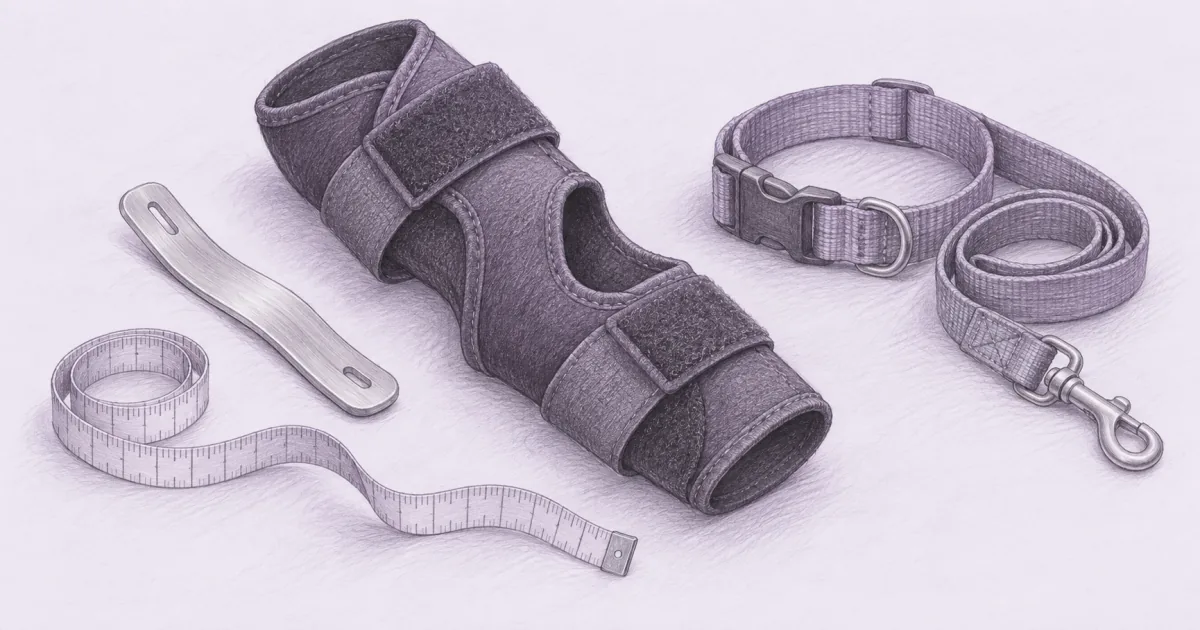
Best Dog Knee Brace (2026): Compression Wrap vs Rigid Splint for CCL, Luxating Patella
Accessories
The best dog knee brace matches the injury and the dog. Start with a UgMoucl compression wrap with spring side stabilizers for a partial CCL or luxating patella, a wider MerryMilo adjustable wrap for larger or longer-legged dogs, and named custom-fit veterinary braces when the tear is more advanced.
Our picks
A dog knee brace is not a cure. It is a tool that holds the joint steady while the dog walks, builds scar tissue, or recovers from surgery. Pick by the injury and the dog's size first, then by brace type. A small calm dog with a mild patella slip does well in a soft wrap. A 60-pound dog with a real partial CCL tear needs a hinged wrap with side stabilizers or a custom rigid brace.
If your dog is still mobile and your vet has graded the injury as a partial tear, conservative management with a brace plus crate rest is a real option for the first six to eight weeks. If your dog cannot put any weight on the leg, the drawer sign is obvious, or the dog is under five years old, surgery is still the standard answer.
Pair any brace with a ramp for the bed or car and a crate pad so the dog does not jump during the rest phase.
Pick by injury and dog size first
If your dog is over 50 pounds or has a confirmed full tear, the wraps in this guide are a stopgap. The right next step is a custom-fit veterinary brace from a brand like Balto, Ortho Dog, or Animal Ortho Care. Your vet or a rehab specialist measures the dog and orders a brace that fits the specific leg.
Top pick for most dogs: UgMoucl compression wrap (M)
The UgMoucl Dog Knee Brace for Back Leg, Hind & Rear Legs Senior Dog, M is the default pick for a partial CCL tear or a luxating patella in a dog that weighs 25 to 50 pounds. A neoprene compression wrap with built-in spring side stabilizers and an elastic fit that holds the leg during walks. UgMoucl runs an Amazon brand store, so the sizing questions get answered directly.
The wrap is the right thickness for compression without bulk. It slides over the leg, the spring stabilizers settle on either side of the knee, and the straps tighten along the upper and lower thigh. Most dogs walk out of the fitting room favoring the leg less than they did going in.
The honest downside is that no wrap replaces surgery on a full CCL tear with drawer instability. A brace is a tool for partial tears, post-surgery support, and arthritis. The other honest downside is review history depth: this is a newer listing, so we recommend re-checking sizing with the brand if the first wrap does not seat right.
Second pick for larger dogs: MerryMilo adjustable wrap
The MerryMilo Dog Knee Brace for Torn ACL Hind Leg is the right pick when the dog needs the longer thigh or wider girth that the M wrap cannot cover. A padded compression sleeve with an adjustable fit, sized for medium and large dogs with a longer hind leg.
It is the right brace when the M wrap measures too short, when a multi-dog home has one dog on the smaller fit and one larger, or when a larger dog needs more surface area across the knee.
The honest tradeoff is that there is no rigid stay. A 70-pound dog that throws weight into the brace will flatten the compression over time. For that dog, step up to a custom-fit rigid brace.
How to measure a dog for a knee brace
- Stand the dog on a flat surface. Measure while the dog is standing, not lying down.
- Measure the circumference of the upper thigh, about 1 inch above the knee.
- Measure the circumference of the lower thigh, about 1 inch below the knee.
- Measure the length from the upper thigh point to just above the hock.
- Compare all three numbers to the brand's sizing chart. Pick the size where all three numbers fall in the same range.
- Aim for a snug fit that lets one finger slide under the wrap. Too tight and the brace rubs. Too loose and it slides.
If the measurements fall in two sizes, go up a size and use the wrap's adjustment straps to take up the slack. A wrap that is too tight causes skin sores within a week. A wrap that is too loose slides and the dog learns to hate it.
Wraps, hinged wraps, and rigid braces
Wraps are the cheapest and most common. Soft neoprene with velcro straps. Good for mild patella slips, post-surgery support in the first eight weeks, and arthritis in older dogs. Limited support for an active large dog with a real partial tear.
Hinged wraps add side stabilizers or removable metal stays. The hinge limits side-to-side wobble without locking the knee. Good for partial CCL tears in dogs that weigh 25 to 60 pounds. The UgMoucl wrap in this guide sits in the compression-with-stabilizers lane.
Rigid custom braces are made from a cast or 3D scan of the dog's leg. Brands like Balto, Ortho Dog, Animal Ortho Care, and Hero Braces build them to fit one specific dog. They cost more ($300 to $1,500), but they are the right answer for a partial tear in a 70-pound dog or a post-surgery dog that needs a long-term tool.
Pair the brace type with the dog's size and the injury grade. A small dog with mild patella slip does well in a soft wrap. A mid-size dog with a real partial tear needs a hinged wrap. A large dog or a working dog usually needs a custom rigid brace.
How long to wear a knee brace
Start with a slow build-up. 30 minutes on day one, add 30 minutes per day, and work up to full daytime wear in two weeks. Most dogs wear the brace during walks and active hours, not overnight. Remove the brace at night to let the skin breathe. Check the skin under the brace every day for the first week, then every other day after that.
A common mistake is leaving the brace on 24/7 from day one. Dogs develop hot spots and skin sores within a week. A slow build-up is faster overall because the dog stays comfortable and keeps the brace on.
If your dog starts to hate the brace, cut back to the previous day's wear time for a day or two, then build up again. Treats during the wrap-on and wrap-off routine help. Most dogs accept the brace within two weeks if the build-up is slow.
What a knee brace cannot do
A brace does not replace surgery on a full CCL tear with drawer instability. A brace does not fix a grade 4 luxating patella. A brace does not reverse arthritis. A brace does not stop a determined chewer from removing it.
A brace does stabilize the joint while the dog walks. A brace does reduce pain during the conservative management phase. A brace does keep the dog moving while scar tissue builds or while the dog waits for surgery. A brace does give older dogs with arthritis a more stable walk.
Be honest with yourself about the role. A brace is a tool. Pair it with crate rest, controlled walks, a ramp for the bed, and a dog bed that supports the joints. The brace is one layer. The rest is rehab discipline.
When to skip the brace and call the surgeon
Skip the brace and call the surgeon if your dog cannot put any weight on the leg at all. Skip the brace and call the surgeon if your dog is under five years old with a confirmed full CCL tear. Skip the brace if the drawer sign is obvious (your vet can demonstrate this in five seconds). Skip the brace if your dog has had a partial tear that has not improved in eight weeks of conservative management.
Surgery (TPLO, TTA, or lateral suture) is still the standard treatment for a full CCL tear in a young dog. The brace becomes a post-surgery tool rather than the main treatment. A custom veterinary brace after surgery gives the dog a long-term stability layer while the new bone or graft heals.
Pair the brace with the rest of the recovery kit
A brace works better when the rest of the recovery is also set up. A dog ramp for the bed and car stops the dog from jumping. A crate pad gives the leg a soft surface to rest on during crate time. A slow-feeder bowl keeps a bored dog busy during crate rest. A dog harness makes it easier to lift the dog outside for bathroom breaks without putting weight on the bad leg.
A brace alone does not fix a partial CCL tear. A brace plus crate rest plus controlled walks plus a ramp and a harness does. The brace is the visible tool. The rest of the kit is what makes the tool work.
Bottom line
The best dog knee brace for a partial CCL tear or a luxating patella in a 25 to 50 pound dog is the UgMoucl Dog Knee Brace for Back Leg, Hind & Rear Legs Senior Dog, M. The spring side stabilizers and elastic compression fit earn the pick.
For a longer-legged or larger dog, the MerryMilo Dog Knee Brace for Torn ACL Hind Leg is the wider option. For a large dog with a real partial tear or a post-surgery dog, step up to a custom-fit veterinary brace from a brand like Balto, Ortho Dog, or Animal Ortho Care.
Talk to your vet before buying. Pair any brace with crate rest, controlled walks, a ramp, and a joint-friendly bed. The brace is one tool in a recovery kit, not the whole kit.
Frequently Asked Questions
What is the best dog knee brace for most dogs?
Start with the UgMoucl Dog Knee Brace for Back Leg, Hind & Rear Legs Senior Dog, M for a partial CCL tear or luxating patella in dogs that weigh 25 to 50 pounds. The spring side stabilizers and elastic compression fit keep the wrap seated on the leg during walks, which is the most common complaint about cheaper wraps. Use the MerryMilo Dog Knee Brace for Torn ACL Hind Leg when the dog is larger or needs a longer fit.
Do vets recommend knee braces for dogs?
Most orthopedic vets recommend braces for partial CCL tears, luxating patella, post-surgery support, and arthritis, but not as a replacement for surgery on a full CCL tear with drawer instability. Whole Dog Journal and VCA Hospitals both frame braces as a conservative management tool, not a cure. Talk to your vet before buying.
Can a dog knee brace fix a torn ACL?
No brace fixes a torn ACL. A brace stabilizes the joint, reduces pain, and keeps the dog moving while scar tissue builds or while the dog waits for surgery. For a full CCL tear with drawer sign, surgery (TPLO, TTA, or lateral suture) is still the standard treatment. Braces are most useful for partial tears, post-surgery support, and older dogs who cannot have anesthesia.
What is the difference between a wrap and a hinged dog knee brace?
A wrap is a soft neoprene sleeve that adds compression and warmth. A hinged brace adds metal or plastic stays that limit side-to-side motion. Wraps are cheaper and easier to fit. Hinged braces cost more but give a dog with a real partial tear more support during walks. Most dogs start with a wrap and upgrade to a hinged brace if pain or lameness returns.
How long should a dog wear a knee brace each day?
Follow a slow build-up: 30 minutes on day one, add 30 minutes per day, and work up to full daytime wear in two weeks. Most dogs wear the brace during walks and active hours, not overnight. Always remove the brace at night unless your vet says otherwise. Check the skin under the brace daily for rubs during the first week.
How do I measure my dog for a knee brace?
Measure the circumference of the upper thigh (about 1 inch above the knee), the lower thigh (about 1 inch below the knee), and the length from thigh to hock. Compare to the brand's sizing chart. Measure while the dog is standing, not lying down. A snug fit that lets one finger slide under the wrap is the right tension. Too tight and the brace rubs the skin. Too loose and it slides.
Will a dog knee brace help a dog with a luxating patella?
Yes for grades 1 to 3, where the kneecap slips out of the groove intermittently. A wrap or hinged brace keeps the joint aligned and reduces the slip. Grade 4 luxating patella (the kneecap is permanently out of the groove) usually needs surgery. Ask your vet which grade your dog has before buying.
What is the cheapest dog knee brace that actually works?
The MerryMilo Dog Knee Brace for Torn ACL Hind Leg is one of the lower-priced wraps we verified in this category. The compression wrap is a soft sleeve, not a rigid orthosis, so it is the right pick for a calm dog with mild lameness or a senior dog, not a strong large dog with a real partial CCL tear. For larger dogs with stronger symptoms, the rigid custom veterinary brace pays for itself.
Can my dog wear a knee brace on walks?
Yes, that is the main use case. Most dogs walk more comfortably in a brace during the conservative management phase or after surgery. Take the brace off at night to let the skin breathe. Check the leg for hot spots after every walk during the first week. A brace is not a replacement for crate rest during the first six weeks after a partial CCL tear.