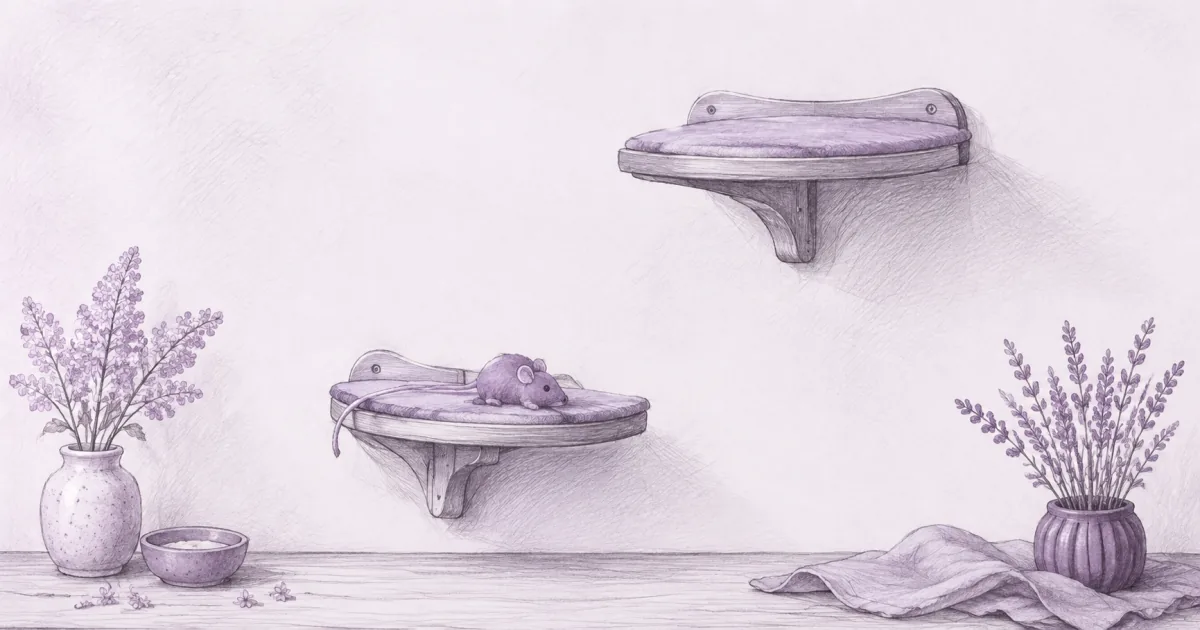
Best Cat Wall Shelves (2026): Floating Climbing Setups for Real Walls
Accessories
The best cat wall shelves give a cat vertical territory without eating floor space. Start with a 4-in-1 climbing set, then add a birch perch where the cat already likes to watch the room.
Our picks
Cats want height. Wild cats climb to hunt and to stay safe, and indoor cats keep the same instinct when the sofa back and the bookshelf are the only tall things in the room. Wall-mounted shelves give a cat vertical territory without taking over the floor. A small floor cat tree still earns its space for napping, but for the cat that already watches the room from a high spot, shelves beat a tower.
Browse more cat furniture in accessories. For a window-mounted perch that hangs on the sill, see best cat window perch. For a covered den the cat can hide inside, see best cat scratching post. A floor cat tree covers napping and scratching in one piece: see best cat tree.
What to look for in cat wall shelves
Stud mounting is the line between safe and "wait, why is the shelf on the floor." Most shelves are rated for a stud mount. Drywall anchors hold for a small cat but fail under a 15-pound jump. Find the studs with a basic stud finder, mark the layout, and mount into wood.
Shelf spacing decides whether the cat uses the route or not. Aim for 18 to 22 inches between shelves vertically. That range matches an adult cat's comfortable step-jump. Closer for kittens and senior cats. Higher shelves belong at the top of the wall for a perch, not as the second step.
Weight rating is conservative for a reason. A 15-pound rating means the shelf holds 15 pounds of still cat. A jumping cat adds force. Pick a shelf rated at least 50 percent above your cat's actual weight for safety.
Top pick: FUKUMARU 4-in-1 set
The FUKUMARU Cat Wall Shelves 4-in-1 Set is the best cat wall shelf set when you want a real climbing route on one wall. The four pieces are spaced to give an adult cat a step-jump path from the floor up to a perch near the ceiling. The sisal-wrapped post doubles as a scratching surface, which is the biggest reason cats abandon shelves: they want to scratch on the way up. The grey finish looks like furniture, not a carpeted cat toy.
Use it on a 16-inch stud layout, which is the standard in US residential walls. For odd stud spacing, the set still works if you adjust the layout. Add a scratching post somewhere in the room if your cat prefers a tall post for stretching.
Modern pick: INICIO 3-step birch
The INICIO Cat Wall Shelves 3-Step is the right pick for a small cat under 15 pounds or for a room where the shelves need to look like real furniture. The birch ply has a warm natural finish that looks more like a floating shelf than a cat accessory. The cushioned perches give older cats a soft landing.
Pick this when the shelf is part of how the room looks. The birch sets a cleaner tone than the grey FUKUMARU. For a larger cat or a multi-cat home, size up to a wider set or layer two sets on one wall.
How to mount wall shelves so they actually hold
- Find the studs in the wall with a stud finder. Mark both edges.
- Sketch the layout on paper first. Match the shelf spacing to the cat's jump range.
- Hold the first shelf at the height the cat already likes to watch from.
- Drill pilot holes slightly smaller than the mounting screws.
- Mount into studs. Use a level on every shelf.
- Test each shelf with the cat's weight plus a margin before letting the cat on it.
- Re-tighten after the first month. Wood and drywall shift with humidity.
If you cannot find studs, use toggle bolts rated for at least double the cat's weight. Skip plastic anchors for any cat over 8 pounds.
Where to place the first shelf
The first shelf should land where the cat already wants to be. Watch the cat for two days. Note where it jumps when startled, where it naps at midday, and where it watches you from. Place the first shelf in that spot, not in the spot that looks balanced on the wall. Cats vote with their paws.
Common landing spots include the back of the sofa, the windowsill, the top of a low bookshelf, and the corner of the room where the cat can see the door. Build the route from there.
When a wall shelf is not the right pick
Skip wall shelves for a cat that already uses a floor cat tree and never jumps higher. Adding shelves on top of an existing tree is over-engineering the room.
Skip wall shelves when the cat is a heavy scratcher. The cat will use the shelves as a launch pad for the wall, not as a perch. Pair the shelves with a scratching post or a sisal-covered perch set.
Skip wall shelves in a rental where stud mounting is off-limits. A heavy cat plus drywall anchors is a repair bill waiting to happen. A floor tree or a window perch does the same job without the holes.
Keeping the route interesting
- Rotate cushions between shelves every month so the cat rediscovers each perch.
- Add a small toy on the highest shelf. Cats check high places when something changes.
- Place a treat on a different shelf each day. The cat learns the route is alive.
- Replace cushions when the cover wears. A tired cushion is the fastest way to lose a perch.
Frequently Asked Questions
What is the best cat wall shelf for most homes?
Start with the FUKUMARU Cat Wall Shelves 4-in-1 Set when you want a full climbing route with a sisal scratch surface on one wall. Choose the INICIO 3-Step Birch Shelves for a smaller cat or a room where the shelves need to look like real furniture.
Are wall-mounted cat shelves safe?
Yes when you mount into studs or use drywall anchors rated for the cat's weight plus a safety margin. Most wall shelves are rated for cats up to 15 to 25 pounds per shelf. Skip drywall-only installs for a heavy cat. Add a second anchor point for any shelf that holds a cat over 12 pounds.
Do cats actually use wall shelves?
Most cats do, especially when the shelves follow a path the cat already wants to take. Place the first shelf where the cat already jumps, like the back of the sofa or the windowsill. Add the next shelf 18 to 22 inches higher or to the side. Cats prefer step-jumps over long leaps.
How high should cat wall shelves be?
Space shelves 18 to 22 inches apart vertically. That range matches the jump height of an average adult cat. Closer for kittens and older cats. Higher shelves belong near the ceiling for cats that like to supervise the room, not as the first stop on the route.
Where do you put cat wall shelves?
Pick a wall the cat already watches from, often near a window or a doorway. Avoid direct sun, heating vents, and damp basement walls. Stay clear of where a child runs through. The shelves should be where the cat wants to be, not where the room looks best.
What is the difference between cat wall shelves and a cat tree?
Cat wall shelves live on the wall and free up floor space. A cat tree is a floor-standing tower with covered cubbies and posts. Cats that like vertical territory and a perch tend to prefer shelves. Cats that like enclosed dens and scratching posts tend to prefer a tree. For the floor version, see best cat tree.
Do wall shelves replace a scratching post?
Not really. A scratching post gives a cat a vertical surface to stretch and claw. Wall shelves give a cat a perch. A shelf set with a sisal-wrapped post like the FUKUMARU covers both jobs. Otherwise, add a separate scratching post in the same room.
How do you clean cat wall shelves?
Vacuum or lint-roll the cushions weekly. Wipe wood shelves with a damp cloth. Skip bleach on finished wood. Replace cushions when the cover tears or the foam goes flat. A clean perch is the fastest way to keep a cat using the shelves.