Best Cat Scratching Post (2026): Tall Sisal vs Value Rope Posts
Accessories
The best cat scratching post is tall enough for a full stretch, stable enough not to tip, and covered in sisal your cat will actually use. Start with woven sisal for daily claw work, then pick a rope post when you want height for less money.
Our picks
A scratching post only works when it matches how your cat already claws. Vertical stretchers need height and a base that does not tip. If the post wobbles once, many cats write it off and go back to the sofa arm.
This guide is for dedicated posts. If you also need climbing platforms and condos, start with our best cat tree roundup and treat the post as the claw station beside it. Browse more gear in pet accessories.
Woven sisal vs tall rope posts
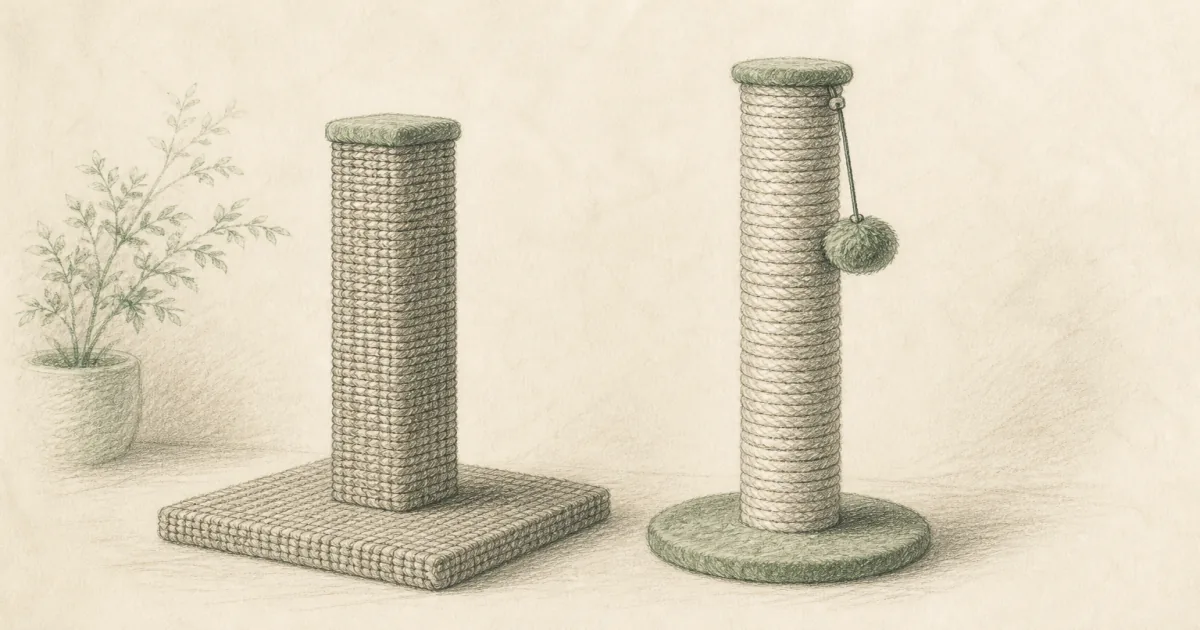
Woven sisal usually outlasts cheap rope wraps for cats that scratch every day.
Tall rope posts win when you need more stretch height without paying SmartCat money.
Posts with a hanging ball help curious cats notice the new object on day one.
How tall should a cat scratching post be?
A post should be as tall as your cat is when fully stretched, plus a couple of inches. For most adults that is 30 inches or more. A short post forces the cat to scratch from a crouch, which is not the position they use on your sofa.
The three picks in this guide run 32, 34, and 35.4 inches, which is why they cover most adult cats. If your cat is a 15-pound-plus lounger, the extra height of the Amazon Basics post earns its place, and a sturdier base matters more than another inch.
Why the base matters more than the height
A post that tips is finished. Once a post falls over on a cat, they rarely trust it again. That is why the recommended base is at least 16 inches by 16 inches, and why all three picks here use a wide base rather than a slim one.
The SmartCat's 16x16 base is 256 square inches, or about 1.8 square feet of floor. The Amazon Basics post uses a 15.75x15.75 wood base, and the MECOOL uses a weighted base under a carpet covering. Weight and footprint are doing the same job: stopping the post from dancing when a cat launches into it.
Top pick: SmartCat Ultimate 32-inch tower
The SmartCat Ultimate Scratching Post – Gray, Large 32 Inch Tower is the default best cat scratching post for most US homes. Thirty-two inches gives adult cats a real stretch. The wide base keeps the post from dancing across the floor when a cat launches into it.
Woven sisal holds up better than rope that frays in a week. Put it beside the sofa or chair they already claim, not in a dead corner. Pair it with a window perch if your cat wants lookout time after claw work.
Skip this tower only if floor space is truly gone. Do not replace it with a tippy mini post. Buy a stable shorter option only if your cat is small and the room cannot take a 16-inch base.
Tall value pick: Amazon Basics 35.4-inch post
The Amazon Basics Sturdy Cat Scratching Post for Indoor Cats & Kittens, Classic Single Post with Sisal Rope, Jute Fiber, Wood Base, Large (35.4"H), Brown is for owners who want more height without woven-fabric pricing. The wood base matters. Tall rope posts without a wide base tip, and tipped posts get abandoned.
Expect rope wear. That is the tradeoff. Vacuum loose fibers and retighten hardware if the post starts to rock. If your cat shreds rope in days, step up to SmartCat woven sisal.
Budget ball pick: MECOOL 34-inch post
The MECOOL 34” Tall Cat Scratching Post Premium Basics Kitten Scratcher Sisal Scratch Posts Trees with Hanging Ball for Indoor Cats, Beige adds a hanging ball so the post is not a silent stick in the corner. Thirty-four inches covers most adult stretches. The base is weighted MDF under carpet, which is why it weighs only 6.18 pounds while still staying planted.
Replace the ball when the string frays. Supervise cats that try to eat dangling toys. If the rope wrap fails early, treat this as a starter post and move to woven sisal for the long term.
How long does a sisal scratching post actually last?
Longer than cardboard, shorter than the frame it is wrapped around. The wrap is a consumable, and the rates below are the ones the re-roping community works to. The frame usually outlives two or three wraps.
Multi-cat homes shorten every number in that table. So does a cat who scratches hard rather than often.
What wears first on a sisal post
The top. Cats hook in near the top of their reach and pull down, so the upper wrap takes the load while the lower half still looks new. That is why a re-rope can stop halfway and reuse the sound lower section, and why a post can look fine in photos while the working surface has gone.
Is it cheaper to re-rope or replace?
Re-rope a post with a solid frame and a base that still sits flat. The length you need comes from a simple formula: height divided by rope diameter, multiplied by the post's circumference. A 600 mm post with a 100 mm circumference takes 10 metres of 6 mm sisal. Run the same formula on a 34-inch post (864 mm) and you need about 14.4 metres.
Then compare that against the post price. The MECOOL at $24.99 is cheap enough that most owners replace it, while the SmartCat at $79.99 is worth a re-wrap. Over eight years the SmartCat works out to about $10 a year, and the MECOOL replaced every three years is about $8.33 a year, so the cheap post is not automatically the cheap decision once you count the replacements.
How do you swap a post without upsetting your cat?
Stand the new post beside the old one and let the cat choose. The old post carries the cat's own scent marks, and pulling it out in one move removes a familiar object from their territory, which is how a perfectly good new post gets rejected.
Use the scent transfer trick
Rub the old post down with a clean sock, then rub the new post with the same sock. You are moving paw-pad scent, not your own. Do not rub the cat with the sock, because facial pheromones work differently and cats do not usually scratch where they facially rub.
Keep both posts for a couple of weeks. When the new one is clearly in use, retire the old one rather than leaving a shredded wrap in place.
Placement that actually redirects scratching
- Put the post within a few feet of the current damage site.
- Make the sofa less rewarding for a week (covers, temporary deterrents) while the post gets used.
- Reward the post. Do not punish after the fact.
- Add a second texture nearby if they ignore the first one.
- Keep nails trimmed so furniture damage slows even when habits slip.
An automatic cat toy can burn energy after scratching, but toys do not replace a claw station.
Who should skip a freestanding post
Skip a tall tower if you cannot spare a stable footprint, or if every freestanding object becomes a tip-over game. In those cases, look at wall-mounted scratchers or a compact tree layout, and do not buy a decorative stick that rocks on day one.
Also skip a rope post if your cat has already shredded one. If you go through two rope posts in a year, buy a woven sisal post or a mat-and-frame design instead of a third rope wrap.
Bottom line
Buy the SmartCat Ultimate Scratching Post – Gray, Large 32 Inch Tower if you want one strong answer for vertical scratching. Choose the Amazon Basics 35.4-inch post when height on a budget matters more. Choose the MECOOL 34-inch post when a hanging ball helps your cat notice the new station.
Frequently Asked Questions
What is the best cat scratching post for most homes?
Start with the SmartCat Ultimate Scratching Post – Gray, Large 32 Inch Tower for woven sisal that lasts. Choose the Amazon Basics 35.4-inch post when you want more height for less money, or the MECOOL 34-inch post when a hanging ball helps pull the cat in.
How tall should a cat scratching post be?
Tall enough for a full body stretch with claws extended. For most adult cats, aim near 30 inches or more. Short decorative posts often get ignored.
Woven sisal or rope wrap?
Woven sisal fabric usually lasts longer for daily claw work. Rope wraps are fine on a budget, but expect earlier fray and more fiber on the floor.
How long does a sisal scratching post last?
Sisal rope posts typically run 6 to 12 months before the wrap needs attention. Woven sisal mats and panels run 9 to 18 months. Cardboard scratchers last 1 to 3 months, and carpeted ones sit in the middle at 6 to 12 months.
Which part of a scratching post wears out first?
The top. That is where most cats hook in and pull, so the upper wrap thins while the bottom still looks new. A re-rope can stop halfway down for that reason.
Should I re-rope a scratching post or replace it?
Re-rope a post with a solid frame and a sound base. Work out the rope length with height divided by rope diameter, multiplied by the post's circumference. A 34-inch post with a 100 mm circumference takes about 14.4 metres of 6 mm sisal.
How do I swap a scratching post without upsetting my cat?
Stand the new post beside the old one first and let the cat choose. Rub the old post with a clean sock, then rub the new post with the same sock, so the new one carries the cat's own paw scent before the old one goes away.
Will a scratching post stop sofa damage?
It helps when you put the post beside the furniture they already use, then praise use of the post. Moving the post to a forgotten hallway rarely works.
Is a scratching post the same as a cat tree?
No. A post is for claw work. A cat tree adds perches and condos for climbing and napping. Many cats want both.
Do kittens need a different post?
Kittens can use a stable adult post if they can reach it safely. Skip wobbly novelty posts that tip on the first launch.
How do you introduce a new scratching post?
Place it where the cat already scratches, add a little catnip if needed, and gently redirect paws from the sofa to the post for a few days.
When should you replace a scratching post?
Revisit the post when the wrap is shredded to bare wood, the hanging toy frays into swallowable bits, or the base rocks after you retighten hardware.