Best Cat Brush for Long Hair (2026): Slicker vs De-Matting Comb vs Undercoat Rake
Accessories
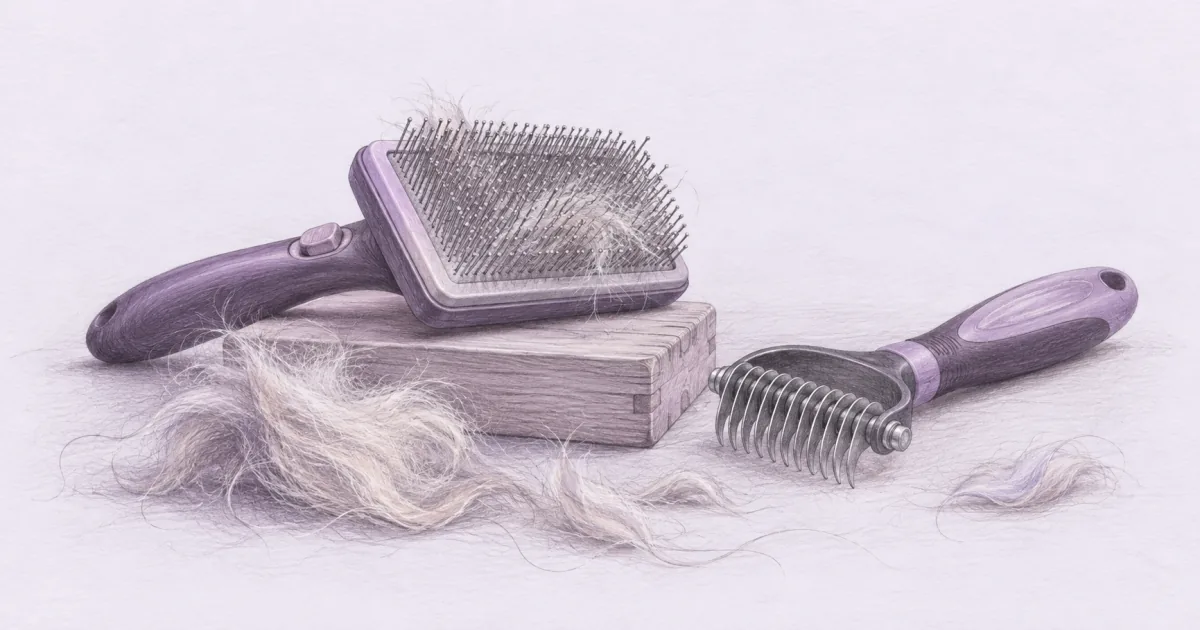
The best cat brush for long hair is a slicker for daily brushing and an undercoat rake for shedding season, with a separate de-matting comb on hand for tangles. Start with the Hertzko self-cleaning slicker for routine brushing, add the FURminator long-hair undercoat tool for coat blowouts, and keep the Docrok de-matting comb for the mats that brushing the brushes.
Our picks
A long-hair cat is not a short-hair cat with longer fur. Maine Coons, Persians, Ragdolls, and Himalayans carry an undercoat that mats if you skip a week. A slicker brush alone handles daily work. An undercoat rake handles shedding season. A de-matting comb handles the knots both brushes leave behind. Pick the right tool for the right job and brushing takes ten minutes a day instead of an hour once a month.
If you also groom a dog in the same home, the dog deshedding brush guide covers the dog side of the routine. For hair that already escaped onto the furniture, see best pet hair remover and best pet hair vacuum. For a long-hair cat that needs a bath between brushings, see best dog shampoo for the soap notes.
Grooming tools sit under the wider accessory guides, which gathers the everyday cat gear in one spot.
Which cat brush to start with for long hair
The slicker is the workhorse. The undercoat rake is the seasonal tool. The de-matting comb is the emergency tool. Most long-hair cat homes need all three.
Best daily slicker: Hertzko Self Cleaning
The Hertzko Self Cleaning Slicker Brush is the best cat brush for long hair for routine daily brushing. Retractable fine wire bristles reach the undercoat without scratching skin. The one-click bristle retraction lifts the hair off the brush in seconds, which is the difference between a two-minute brushing session and a ten-minute one.
The handle is comfortable for the longer sessions shedding season demands. The angled bristles follow the cat's body, so a Maine Coon or Ragdoll gets brushed from neck to tail without the brush flipping out of your hand. The bristle tips wear out after a year of daily brushing on a big cat, but a replacement is cheap.
The honest tradeoff is that a slicker brush is the wrong tool for tight mats. The bristles bend and pull on the skin. Stop at the first tangle and switch to a de-matting comb like the Docrok. Do not force a slicker through a mat. That is how cats learn to hate brushing.
Best for shedding season: FURminator Long Hair
The FURminator Medium to Large Cat deShedding Tool for Long Hair is the right tool for the undercoat that a slicker leaves behind. Long teeth reach through the top coat to the soft undercoat where shed hair accumulates. Use it weekly during spring and fall for indoor cats, and twice a week during the same windows for cats that go outside.
It is sized for cats over 10 pounds. Maine Coons, Ragdolls, and most domestic long-hairs fit the medium-large size. Skip the FURminator on cats under 10 pounds. The teeth are too long for small cats and the pressure is too aggressive.
Use it after the slicker, not instead of the slicker. The slicker pulls loose surface hair. The FURminator pulls the loose undercoat. Skipping the slicker leaves the top coat tangled and pulls the undercoat harder than it needs to. Pair the two for a complete shedding-season routine.
Best for mats: Docrok De-Matting Comb
The Docrok Pet Grooming Combo is the de-matting comb to keep on hand for knots that the slicker cannot split. Rounded teeth work the mat apart gently. The metal teeth are sharper than slicker bristles, so they cut through tangles that a slicker just bends against.
Pull straight down through the mat, away from the skin. Do not saw back and forth, and do not pull up toward the skin. Both motions pull on the skin and make the cat flinch. Work the edges of the mat first, then move to the center.
A de-matting comb is not a daily brush. Save it for mat emergencies and weekly touch-ups on cats that mat in the same spots (armpits, behind the ears, and the britches on the back legs). For daily brushing, the slicker is faster and gentler.
Why long-hair cats need a different routine than short-hair cats
Short-hair cats shed on the couch. Long-hair cats shed on the couch, swallow loose hair into hairballs, and mat behind the ears when brushing is skipped. The undercoat that keeps a Maine Coon warm in winter is the same undercoat that felts into a pelt by spring if you skip brushing.
Daily brushing is the cheapest fix. Ten minutes a day with a slicker keeps the top coat smooth and pulls loose hair before the cat swallows it. Skip daily brushing and the cat spends more time grooming itself, which means more hairballs on the carpet.
Weekly undercoat raking during shedding season pulls the undercoat the slicker cannot reach. Twice a year is enough for indoor cats under artificial light. Outdoor cats and indoor cats that spend time by sunny windows shed harder in spring and fall.
How to brush a long-hair cat that hates brushing
Start with a slicker session of two minutes, not ten. Reward with a treat after each session. Stop before the cat growls or flicks the tail. A brushing session that ends on a calm note teaches the cat that brushing ends.
Drop to a softer slicker if the cat flinches. The Hertzko slicker has angled fine bristles that most cats tolerate. A stiffer slicker pulls more on the undercoat and makes the cat associate the brush with pain.
Work from neck to tail, not tail to neck. Cats prefer being brushed in the direction the fur grows. Brushing against the grain pulls the undercoat and makes the cat duck. Brushing with the grain smooths the top coat and removes loose hair.
Reward with a treat or play after each session. Cats that associate the brush with food or play learn to tolerate brushing. Cats that associate the brush with being held still learn to fear brushing.
Mistakes that turn brushing into a fight
- Starting a brushing session when the cat is already agitated. Wait for a calm moment after a nap.
- Brushing too long. Stop after two minutes for a cat that is new to brushing.
- Forcing a slicker through a mat. Stop and switch to a de-matting comb.
- Brushing against the grain. Brush in the direction the fur grows.
- Punishing the cat for growling. The cat is telling you to stop. Listen.
A brushing session is supposed to feel like a massage to the cat. Pulling, forcing, and long sessions turn brushing into a fight. Short sessions with a light hand turn brushing into a routine the cat waits for.
How often to use each tool
Daily: the Hertzko slicker for routine brushing. Ten minutes a day is enough for most long-hair cats. Skip days the cat seems tired or sick.
Weekly during shedding season: the FURminator undercoat tool. Skip on weeks the cat has no loose undercoat. Run your hand through the coat. If your hand comes back covered in hair, it is time for the rake.
As needed: the Docrok de-matting comb. Check armpits, behind the ears, and the britches every brushing session. Pull a mat early with the de-matting comb before the slicker.
Skip the FURminator on small cats under 10 pounds. The teeth are too aggressive. Skip all three tools on a cat that has an open wound, a hot spot, or a skin infection. See a vet first.
Bottom line
For most long-hair cats, the Hertzko Self Cleaning Slicker Brush is the best cat brush for daily brushing. The one-click bristle retraction cleans the brush in seconds.
Add the FURminator Medium to Large Cat deShedding Tool for Long Hair for weekly undercoat work during shedding season. Keep the Docrok Pet Grooming Combo on hand for mats that the slicker cannot split.
Pair the routine with a pet hair remover for the hair that already escaped and a cat bed the cat will sleep on after brushing. The long-hair setup is mostly built.
Frequently Asked Questions
What is the best cat brush for long hair for most homes?
Start with the Hertzko Self Cleaning Slicker Brush for daily brushing on Maine Coons, Persians, and other long-hair breeds. Add the FURminator Medium to Large Cat deShedding Tool for Long Hair for weekly undercoat work during shedding season. Keep the Docrok Pet Grooming Combo on hand for mats that the slicker cannot split.
How often should I brush a long-hair cat?
Once a day for Persians, Maine Coons, Ragdolls, and other breeds with thick undercoats. Three times a week is the floor for any long-hair cat. Daily brushing is cheaper than a vet visit for hairballs and mat removal.
What is the difference between a slicker brush and an undercoat rake?
A slicker brush has fine wire bristles that grab loose surface hair and small tangles. An undercoat rake has longer teeth that reach through the top coat to the soft undercoat. You need both. The slicker does the daily work. The rake handles shedding season.
Can a slicker brush hurt a long-hair cat?
Yes if you force it through a tight mat. The fine bristles bend and pull on the skin. Stop at the first tangle and switch to a de-matting comb like the Docrok. Short sessions and a light hand avoid skin irritation.
Are de-matting combs safe for cats?
Yes if you use a comb with rounded teeth and work the mat apart gently. Pull straight down through the mat. Do not saw back and forth. A rounded-tooth comb like the Docrok splits the mat without cutting the skin underneath.
What about a FURminator for cats?
Yes, but only the cat-specific FURminator line. The dog FURminator is too aggressive on cat skin. The FURminator Medium to Large Cat deShedding Tool for Long Hair is sized for cats over 10 pounds. Skip the FURminator on small cats under 10 pounds.
Should I bathe a long-hair cat?
Sometimes, but not as a substitute for brushing. Most long-hair cats need a bath every 4 to 6 weeks during shedding season to release the undercoat the rake cannot reach. Use a cat shampoo, not a dog shampoo, and rinse fully. See the dog shampoo guide for the soap notes if you also bathe a dog in the same home.
Why does my cat hate being brushed?
Usually because the brush pulls. Drop to a softer slicker, use shorter sessions, and stop before the cat growls. Reward with a treat after each session. Cats that were not brushed as kittens take weeks to accept a brush, not days.
Is shedding season the same every year?
Roughly. Indoor cats under artificial light shed lightly all year and noticeably more in spring and fall. Outdoor cats shed harder in spring for the summer coat and in fall for the winter coat. Plan weekly undercoat raking during both peaks.
Can brushing replace professional grooming for long-hair cats?
Mostly yes for daily brushing and weekly de-shedding. Skip a groomer only if the cat will let you work the whole body. Persians and Himalayans often need a professional groomer every 8 to 12 weeks for sanitary trims and belly work the owner cannot safely do at home.