Best Cat Bed (2026): Donut vs Cave Picks for Real Cat Naps
Beds and crates
The best cat bed matches the cat’s sleep style, not the cutest photo. Start with a 24-inch round donut for cats that curl up, then choose a covered 15-inch cat cave for cats that hide.
Our picks
A cat bed fails in two ways. It is too small and the cat drapes over the edge, or it is shaped wrong and the cat ignores it for a cardboard box. The fix is matching the shape to how the cat already sleeps and placing the bed where the cat already naps.
Browse more rest gear in beds and crates. For warmth without a plug, see best self-warming cat bed. For a perch option that adds vertical space, see best cat tree. For an outdoor shelter, see best outdoor cat house.
Round donut vs covered cat cave
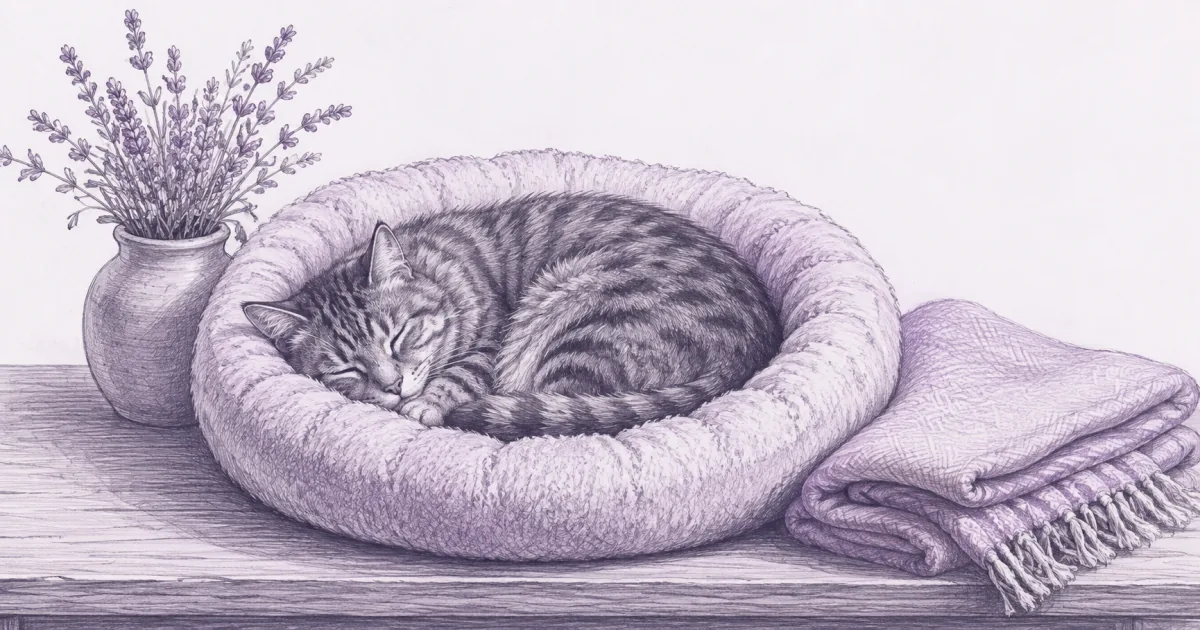
Round donut shapes win when the cat curls up and wants head and neck support from raised bolsters.
Covered cat caves win when the cat hides in boxes, bags, or under furniture and wants a roof over the nap.
Flat mats win when the cat sprawls and ignores any raised edge. Pair a flat mat with a quiet perch like a cat tree for variety.
Love's cabin 24-inch donut: top pick for most cats
The Love's cabin Round Donut Cat and Dog Cushion Bed, 24-inch Yellow Stripe is the best cat bed for most homes because one product covers the boring requirements: a 24-inch round that fits most adult cats, raised bolsters that support the head and neck, a non-slip bottom that stays put on hardwood, and a machine-washable cover that survives weekly washing.
The fabric is a soft cut-pile with a higher-than-average fill amount, which holds its shape better than thin alternatives. The yellow stripe colorway hides everyday fur between washes better than pale neutrals. The bed is rated for cats and small dogs up to about 25 pounds.
Skip the donut if your cat sprawls flat and ignores raised sides. Skip it if the cat hides in boxes instead of curling. For a hideaway shape, see the Amazon Basics cat cave below.
Amazon Basics 15-inch cat cave: best when the cat hides
The Amazon Basics Cat Cave Bed, 15-inch Grey is the move when the cat already hides in boxes, paper bags, or under furniture. The 2-in-1 design folds the roof down into an open mat when the cat wants to sprawl, which is more flexible than a fixed cave. The polyester cover is gentle on paws and the washable cushion keeps cleaning simple.
The 15-inch interior only fits small to medium cats, which is fine for most domestic shorthairs and a stretch for big breeds. Maine Coons and other large cats will need a 20-inch or larger option. The non-slip base helps the cave stay put when the cat launches out of it.
Choose Amazon Basics over the Love's cabin donut when the cat hides rather than curls. Use the convertible feature if you want one product that covers both a cave nap and an open mat nap. The product is the cheapest place on this list to start.
How to choose size and shape
Measure the cat from nose to the base of the tail when stretched out, then add two to four inches. A bed that is too small forces the cat to drape paws over the edge. A bed that is too big removes the security a small cat wants. Most adult domestic cats fit a 20 to 25 inch bed. Maine Coons and other large breeds need 30 inches or more.
Match the shape to how the cat already sleeps. If the cat curls in a tight circle on the rug, buy a round donut with raised bolsters. If the cat disappears into a paper bag, buy a covered cave. If the cat sprawls flat on a chair, buy a low-profile mat and skip the bolsters entirely. The shape that matches the cat’s habit will be the one the cat actually uses.
Where to place a cat bed
Place the bed where the cat already naps. A quiet corner near a window is the classic spot. Avoid placing a bed next to a noisy appliance, a heater vent, or the litter box entry. Cats prefer calm, predictable spots over new places that demand a long commute.
If the cat already has a perch or a cat tree, do not put the bed under the perch. Cats like to look down at nap spots, not be stuck underfoot. For multi-cat homes, place two beds in different rooms so a bossy cat cannot corner a shy one. For senior cats, lower-profile beds with easier step-in are kinder on stiff joints than tall raised bolsters.
Care and replacement signs
Vacuum loose fur weekly with an upholstery attachment. Wash the cover or the whole bed on a gentle cold cycle every few weeks. Air-dry flat. Skip the dryer on high heat, which can shrink the fill and damage the non-slip backing. If the bed starts to smell even after washing, the fill is usually the issue. Replace the bed when the bolsters lose shape, the cover pills, or the non-slip bottom stops gripping.
A freshly washed bed that smells strongly of detergent may need a day or two before a sensitive cat accepts it. Skip harsh fragrance and let the bed air out before returning it to the nap spot. Some cats ignore a clean bed until the familiar scent returns.
When a self-warming or covered shelter is the right tool
A self-warming bed reflects the cat’s own body heat without a plug. It is useful on chilly floors and for older cats. See best self-warming cat bed for the reflective-liner picks.
A covered outdoor shelter belongs in the yard or porch for cats that spend time outside. The shelter is bigger and weather-resistant, not a substitute for an indoor bed. See best outdoor cat house for the porch picks.
For cats that prefer height, see best cat tree. For cats that already sleep on a chair or a rug, a flat mat or a folded throw is often enough, and no bed is required.
Bottom line
Buy the Love's cabin Round Donut Cat and Dog Cushion Bed in 24-inch Yellow Stripe for cats that curl up and want raised sides. Buy the Amazon Basics Cat Cave Bed in 15-inch Grey for cats that hide in small dark spaces and may also nap on a flat mat.
Match the shape to how the cat already sleeps, place the bed where the cat naps, and replace it when the bolsters lose shape or the cover stops washing clean. For warmth without a plug, see best self-warming cat bed. For a perch, see best cat tree.
Frequently Asked Questions
What is the best cat bed for most homes?
Start with the Love's cabin Round Donut Cat and Dog Cushion Bed in 24-inch Yellow Stripe for cats that curl up in a round shape with raised sides. Choose the Amazon Basics Cat Cave Bed in 15-inch Grey when your cat prefers an enclosed hideaway and may also use the cushion as an open mat.
What size cat bed should I buy?
Measure your cat from nose to tail base when fully stretched, then add two to four inches. A bed that is too small forces the cat to drape over the edge. A bed that is too big removes the security a small cat wants. Most adult domestic cats fit a 20 to 25 inch bed. Big breeds like Maine Coons need 30 inches or more.
Donut, cave, or flat mat?
Donut shapes work for cats that curl up and want a sense of security from raised sides. Cave shapes work for cats that hide in small dark spaces. Flat mats work for cats that sprawl out and do not want sides at all. Match the shape to how the cat already sleeps, not the cutest photo.
Do cats actually use the bed you buy?
Most cats need a few days to accept a new bed. Place it beside the cat’s current favorite resting spot rather than replacing it. Add a familiar blanket on top for the first day. If the cat sniffs and walks away, try a different quiet spot before deciding the bed is a bad fit.
Where should I place a cat bed?
A quiet, draft-free corner near a window is the classic spot. Avoid placing a bed next to a noisy appliance, a heater vent, or the litter box entry. For a perch option, see best cat tree. For a covered outdoor shelter, see best outdoor cat house.
What about heating and self-warming beds?
A self-warming bed reflects the cat’s own body heat without a plug. Useful for chilly floors and older cats. See best self-warming cat bed for the reflective-liner picks that do not need electricity.
How do I keep a cat bed clean?
Vacuum loose fur weekly with an upholstery attachment. Wash the cover or the whole bed on a gentle cold cycle every few weeks. Air-dry flat.
If the cat ignores a freshly washed bed for a day or two, the new detergent smell is usually the reason. Skip harsh fragrance and let the bed air out before returning it to the nap spot.
Are bigger cat beds better for senior or arthritic cats?
A wider, lower-to-the-floor bed is usually easier for senior cats than a tall raised-side donut. If your cat has joint stiffness, consider an orthopedic option with denser foam and a lower step-in height. See best orthopedic dog bed for a large-format supportive bed, which works for big senior cats too.