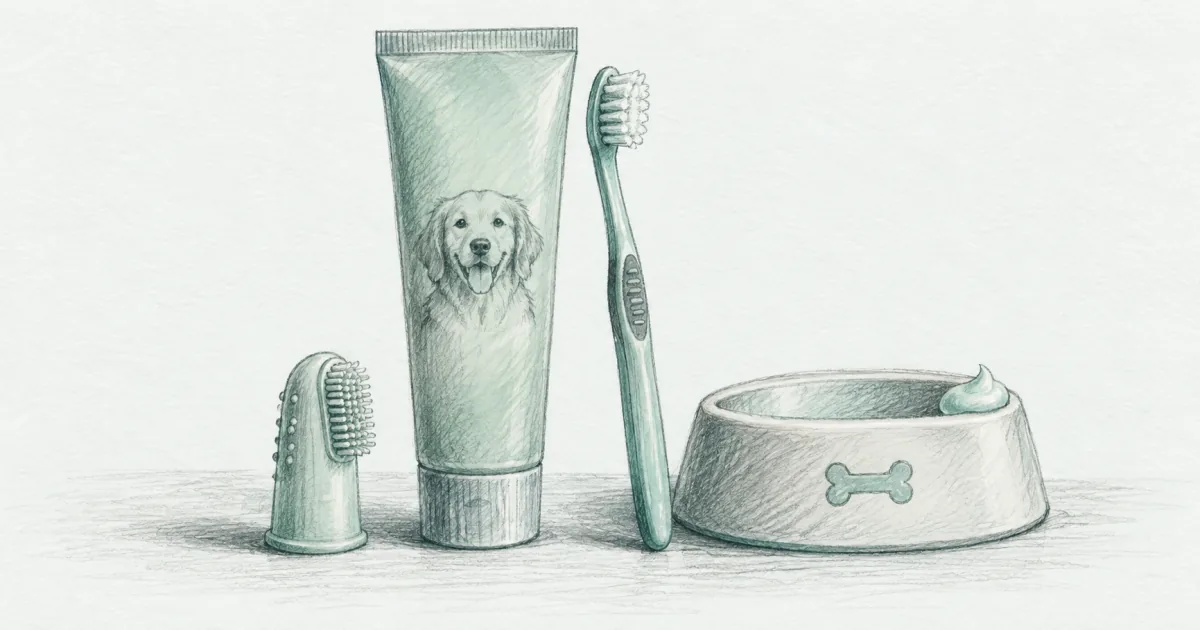
Best Dog Toothpaste (2026): Enzymatic Poultry vs VOHC Paste vs Budget Tube
Accessories
The best dog toothpaste is the one your dog will lick without a fight. Start with a C.E.T. Virbac enzymatic poultry paste for daily brushing, a Petsmile VOHC-accepted paste when you want the strongest veterinary-grade option, and a Arm & Hammer enzymatic paste in a 6.2oz tube when budget matters more than clinical data.
Our picks
Dog toothpaste is the part of dental care most owners skip, then wonder why the breath smells and the vet bill climbs. A daily brushing session with a dog-safe enzymatic paste is the single highest-leverage home dental habit. It costs about 30 cents a day, takes two minutes, and prevents the dental cleaning under anesthesia that costs $400 to $800 every few years. Skipping the paste is the most expensive dental decision a dog owner makes.
Pick the paste by the dog first. Flavor is the gate. A paste the dog refuses to lick sits in the drawer. The enzymatic pastes from C.E.T. and Arm & Hammer use poultry and chicken as the default, which most dogs accept on the first try. Petsmile uses London Broil (a beef flavor) and Rotisserie Chicken and is the only VOHC-accepted toothpaste, which matters most for senior dogs or dogs recovering from a cleaning. Never use human toothpaste. The xylitol and fluoride in human paste are toxic to dogs.
Pair any paste with the right brush. See the best dog toothbrush guide for the full setup. For grooming day, keep dental separate so the dog is not stacking three stressful jobs (bath, nails, teeth) in one sitting. See best dog shampoo and best dog nail grinder for the rest of the grooming kit.
Pick by the dog, not the brand
Flavor is the gate. A paste the dog licks willingly beats a paste with better clinical data that the dog refuses to taste. Test poultry first. Switch only if the dog turns away. Do not buy three pastes of the same flavor before you know what your dog will accept.
Top pick for daily brushing: C.E.T. Enzymatic Poultry
The C.E.T. Enzymatic Toothpaste for Dogs and Cats, Poultry, 2.5oz is the default starter paste for most homes. It is the #1 best-seller in Dog Toothpaste on Amazon, with 18,916 reviews and a 4.6-star average. The poultry flavor is the most widely accepted default for first-time brushers, the dual-enzyme system controls bacterial plaque, and the paste is safe to swallow so there is no rinsing step.
The dual-enzyme system is the part that earns the price. Glucose oxidase and lactoperoxidase react with saliva and the dog's own oral chemistry to form a compound that inhibits the bacteria responsible for plaque. This is the same chemistry that powers the rest of the C.E.T. dental line, including the oral hygiene kits.
The honest downside is that 2.5oz empties faster than expected with daily brushing. A pea-sized dab per session is enough. Budget a second tube as a refill, or step up to the 12g trial-size packets if you want a smaller commitment for the first week.
Best veterinary-grade: Petsmile Professional (VOHC-accepted)
The Petsmile Professional Pet Toothpaste is the only VOHC-accepted toothpaste on the market. VOHC is the Veterinary Oral Health Council, which reviews dental products and awards a seal to those with clinical evidence of plaque or tartar reduction. Petsmile uses a patented active called Calprox, which dissolves the protein pellicle on the teeth. Plaque clings to the pellicle, so removing the pellicle removes the plaque.
Petsmile is the right pick when the dog is a senior recovering from a dental cleaning, when the owner wants the strongest clinically proven option, or when the dog refuses brushing but will lick paste off a finger. The Calprox formula means you can apply the paste to the teeth and let the dog's tongue do the work.
The honest tradeoff is price. Petsmile costs roughly twice as much per ounce as C.E.T. or Arm & Hammer. It is the strongest option, but it is not the most affordable. For most dogs, C.E.T. is the better daily buy. For senior dogs or post-cleaning maintenance, Petsmile is the right upgrade.
Best budget 6.2oz tube: Arm & Hammer Complete Care
The Arm & Hammer Complete Care Enzymatic Dog Toothpaste, Chicken, 6.2oz is the budget pick when you brush daily and want the biggest tube for the money. A 6.2oz tube of enzymatic chicken paste for less than a 2.5oz tube of C.E.T. The same dual-enzyme approach to bacterial plaque control, in a milder flavor profile that some picky dogs accept.
It is the right pick when you brush a multi-dog household and a single 2.5oz tube does not last a month, when the budget is firm and you want the most paste per dollar, or when the dog is a senior and the dental cleaning is years away.
The honest tradeoff is that Arm & Hammer does not carry the VOHC seal. The active chemistry is the same enzymatic approach as C.E.T., but the clinical plaque-reduction studies that earn the VOHC seal belong to Petsmile, not Arm & Hammer. For most dogs, that difference does not matter. For senior dogs with active dental disease, step up to Petsmile.
How to brush a dog's teeth with dog toothpaste
- Start with paste on a finger for a few days. Let the dog lick it. No brush yet.
- Move to a finger brush with paste. Rub the gum line for 10 to 20 seconds per side.
- Move to a soft dual-head brush on a few teeth at a time. Aim for the outside of the upper molars, where plaque builds fastest.
- Stop while the dog is still calm. Treat. End. Do not pry the mouth open for a full cleaning on day one.
- Build up to 30 to 60 seconds per side within two weeks. Daily is the goal. Every other day is the floor.
The paste is the easy part. The brushing is the hard part. Pair the paste with a finger brush for the first week, then move to a dual-head dog toothbrush when the dog accepts the routine. Skip the prying-the-mouth-open method entirely. It teaches the dog to hide the mouth on sight.
Picking the right flavor for your dog
Poultry is the default and the most widely accepted. If the dog turns away from poultry, try malt (C.E.T.) or vanilla-mint (C.E.T.). Vanilla-mint is the right pick for dogs on a restricted diet, because it contains no animal or grain proteins. Beef (Petsmile London Broil) is the right pick for dogs that ignore poultry but lick beef.
Do not buy three pastes of the same flavor before you know what your dog will lick. Test one tube. If the dog accepts it, order the bigger size. If the dog refuses it, switch flavor once, then order.
How often to brush
Daily is the goal. A few calm minutes most days beats one long fight once a month. The dual-enzyme chemistry in C.E.T. and Arm & Hammer works best with daily contact. Every-other-day brushing still helps. Missed days are normal during boarding, recovery, or travel. Restart without making it a battle.
If the dog starts to hate the brushing routine, cut back to every other day for a week, then build back up to daily. Treats after the session help. Most dogs accept the routine within two weeks if the build-up is slow and the session stays short.
What dog toothpaste does not do
Dog toothpaste does not replace a professional dental cleaning under anesthesia. It does not reverse advanced dental disease. It does not remove existing tartar (only mechanical scaling under anesthesia does that). It does not fix a fractured tooth or a gum abscess.
Dog toothpaste controls the bacteria that form plaque between cleanings. Pair it with safe chew toys, a dental-friendly diet when the vet recommends one, and a professional cleaning every one to three years for senior dogs. The paste is the daily maintenance. The cleaning is the periodic reset.
Pair the paste with the rest of the grooming kit
A brushing session is one layer of a dog's grooming routine. Pair it with the rest of the kit so the dog is not stacking three stressful jobs in one sitting. See best dog shampoo for the bath schedule, best dog nail grinder for the nail side, and best dog ear cleaner for the ear side. Keep dental separate so the dog does not learn to dread grooming day.
For grooming day, schedule brushing on a non-bath day. The dog handles stress better when each job has its own short session. A 30-second dental session plus a 5-minute bath plus a 2-minute nail grind in one sitting is too much for most dogs. Spread it across the week.
Bottom line
The best dog toothpaste is the one your dog will lick without a fight. Buy the C.E.T. Enzymatic Toothpaste for Dogs and Cats, Poultry, 2.5oz if you want the most widely accepted enzymatic paste for daily brushing. Pick the Petsmile Professional Pet Toothpaste when you want the only VOHC-accepted toothpaste on the market, especially for senior dogs or post-cleaning maintenance. Pick the Arm & Hammer Complete Care Enzymatic Dog Toothpaste, Chicken, 6.2oz when you brush daily and want the biggest tube for the money.
Pair any paste with a soft-bristled dog toothbrush. Brush daily. Stop while the dog is still calm. Talk to your vet if the breath smells worse after a week of brushing, because that often means a dental cleaning is overdue.
Frequently Asked Questions
What is the best dog toothpaste for most homes?
Start with the C.E.T. Enzymatic Toothpaste for Dogs and Cats, Poultry, 2.5oz for daily brushing. The poultry flavor is the most accepted default, the dual-enzyme system controls bacterial plaque, and most dogs lick it willingly on the brush. Pick the Petsmile Professional Pet Toothpaste when you want the strongest clinically proven option, and the Arm & Hammer Complete Care Enzymatic Dog Toothpaste, Chicken, 6.2oz when budget matters more than clinical data.
Do vets recommend enzymatic or non-enzymatic dog toothpaste?
Most vets recommend enzymatic toothpaste. The dual-enzyme system in C.E.T. and Arm & Hammer (glucose oxidase + lactoperoxidase) reacts with saliva to form a compound that inhibits plaque-forming bacteria. The Virbac clinical literature and most veterinary dental guides favor enzymatic pastes for daily home brushing.
What is the difference between dog toothpaste and human toothpaste?
Human toothpaste contains fluoride and often xylitol, both of which are toxic to dogs. Dog toothpaste is designed to be safe to swallow without rinsing. The enzymatic pastes use the dog's saliva as part of the active chemistry, which means no rinsing is needed. Never use human toothpaste on a dog.
Can my dog swallow dog toothpaste?
Yes, dog toothpaste is formulated to be safe to swallow. C.E.T., Petsmile, and Arm & Hammer are all designed to be swallowed without rinsing. This matters because dogs do not rinse and spit, so any non-safe-to-swallow toothpaste becomes a digestive problem.
How often should I brush my dog's teeth with dog toothpaste?
Daily is the goal. A few calm minutes most days beats one long fight once a month. Missed days are normal, especially during a recovery or boarding stay. Restart without making it a battle. The dual-enzyme system in C.E.T. and Arm & Hammer work best with daily contact, but every-other-day brushing still helps.
What flavor of dog toothpaste do dogs like best?
Poultry is the most widely accepted default. C.E.T. makes poultry, malt, vanilla-mint, beef, and seafood. Vanilla-mint does not contain animal or grain proteins, which makes it the right pick for dogs on a restricted diet. Skip peanut if your dog turns away from nutty smells. Test poultry first, then switch only if the dog refuses it.
Do I need a special brush with dog toothpaste?
A dog-safe toothbrush is the right pair, but the paste alone works on a finger brush or a soft-bristled human brush in a pinch. The C.E.T. enzymatic paste and Arm & Hammer paste both work with a soft-bristled brush or a silicone finger brush. Petsmile is the one brand designed to be applied without a brush at all. Pair any paste with the best dog toothbrush for the full setup.
What is VOHC-accepted dog toothpaste?
VOHC stands for the Veterinary Oral Health Council. They review dental products and award a seal to those with clinical evidence of plaque or tartar reduction. Petsmile is the only VOHC-accepted toothpaste on the market. C.E.T. and Arm & Hammer are widely used but are not VOHC-accepted. The VOHC seal matters most for senior dogs or dogs recovering from a dental cleaning.
Is Petsmile better than C.E.T. dog toothpaste?
Petsmile is the only VOHC-accepted toothpaste and uses a different active (Calprox, which dissolves the protein pellicle). C.E.T. uses a dual-enzyme system and is the most widely used veterinary brand. For most dogs, C.E.T. is the better buy because the dogs accept the flavor more reliably. For senior dogs or dogs recovering from a dental cleaning, Petsmile is the stronger choice.
How long does a 2.5oz tube of dog toothpaste last?
Roughly six to ten weeks of daily brushing for a single dog, depending on how much paste the owner uses per session. A pea-sized dab is enough per brushing. A 6.2oz tube like Arm & Hammer lasts roughly four to six months of daily brushing. Order the larger size if you brush a multi-dog home or want fewer reorders.