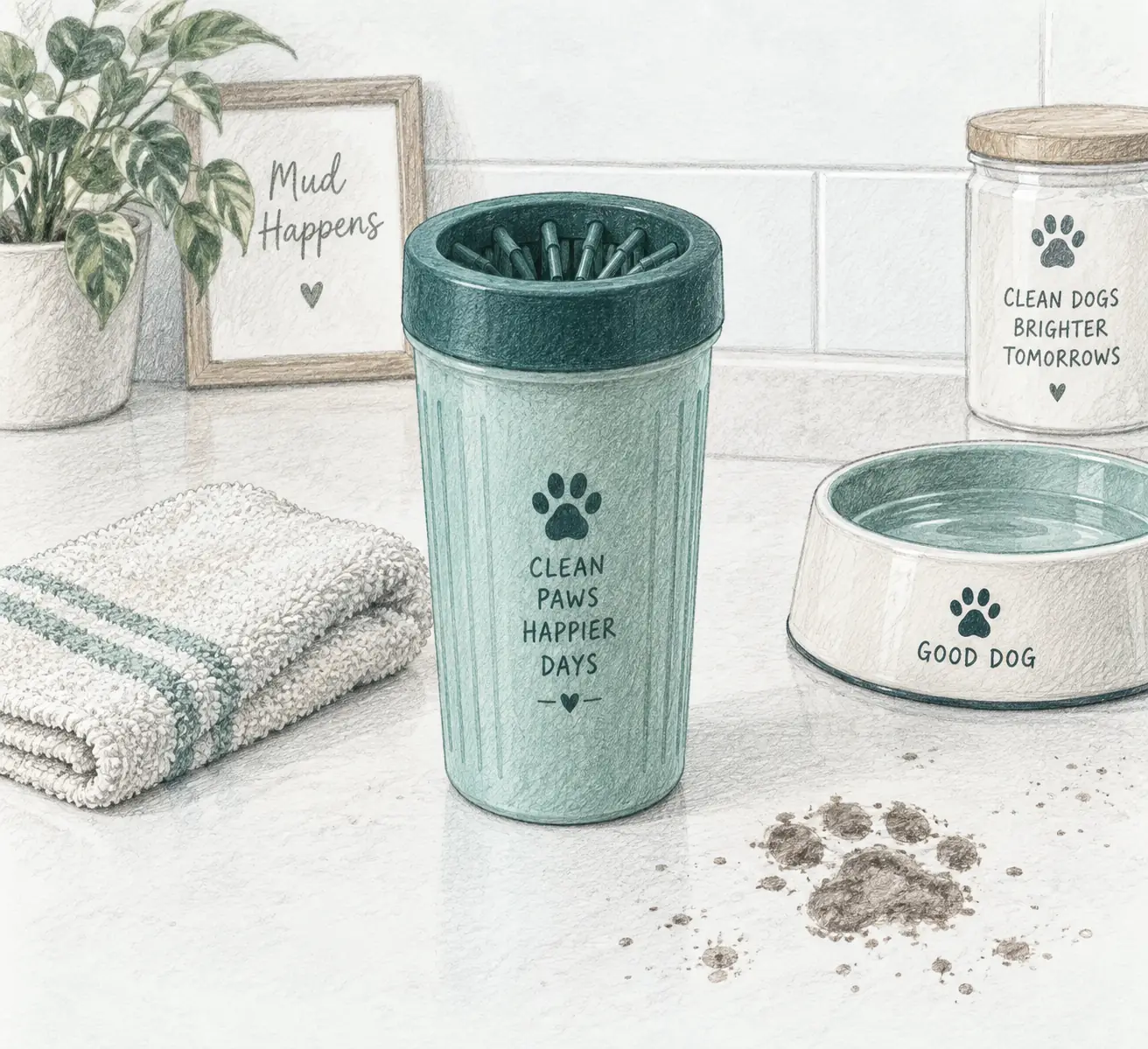
Best Dog Paw Cleaner (2026): Cup, Foam, and Budget Picks
Accessories
A good paw cleaner keeps the mud at the door instead of the hallway. Here are the cup, foam, and budget picks that handle wet mud, city grit, and the after-work walk.
Our picks
Muddy paws are a doorway problem. The dog is fine, the floor is not. The best dog paw cleaner for wet, muddy paws is the Dexas MudBuster twist cup, and the right pick changes with the kind of mess: trail mud wants a cup you fill with warm water, city sidewalk grime wants a no-rinse foam, and a rainy park visit wants whichever one is already in the trunk.
Pair paw cleanup with the rest of the grooming shelf. Our pet grooming glove guide covers coat brushing, and dog booties protect the pads on hot pavement and salted sidewalks. Browse the everyday pet accessories for towels, mats, and travel gear.
What a paw cleaner needs to do
A paw cleaner has one job: get mud out from between the pads without turning your entryway into a swamp. The three shapes do that differently.
A twist cup holds water and a ring of silicone bristles. You insert one paw, twist, and pull out a cleaner foot. The cup contains the dirty water, which is the whole point. It is the best tool for genuine mud.
A foam bottle pumps cleanser into a small built-in brush. No cup, no water, no runoff. It is the tool for grit, pollen, and light dirt, and the only option when you are somewhere without a sink.
A wipe or towel still matters. Every cleaner leaves the paw wet, so keep a microfiber towel by the door and dry each foot before your dog steps inside.
Best overall: Dexas MudBuster Large
The Dexas MudBuster Large Dog Paw Cleaner is the best pick for most dogs that come home muddy. The large size fits paws about 2.5 to 3.5 inches wide, and the soft 1-inch silicone bristles are gentle enough that paw-shy dogs usually tolerate them better than a towel scrub.
Fill it halfway, not to the top. Overfilling is what sends water over the rim, and the hard cup does not flex around wide paws or dewclaws, so wedging a paw in forces a splash. Add the paw, twist a few times, pull it out, and dry. It is quick, and the dirty water stays in the cup instead of on your floor.
Buy this if your dog walks through real mud. Skip it if your dog hates having paws handled at all, or if you need something that fits in a jacket pocket.
Best no-rinse: Dandylion Clean Paws foam
The Dandylion Clean Paws No-Rinse Foam Cleaner is the best pick for apartments, city walks, and dogs with sensitive or itchy paws. There is no rinsing step. Press the pump, massage the foam into the paw with the built-in silicone brush, and wipe the residue away with a dry towel.
The formula is pH balanced and free of sulfates, drying alcohols, and added fragrance, which is why it suits dogs that lick their paws after a walk. It reaches grime between the toes that a flat wipe smears around. It is not built for thick, saturated mud, so keep a cup or a hose for the worst days.
Choose it when convenience and gentle ingredients matter more than price per ounce. Skip it if your dog only ever gets muddy in the backyard, where a cup is cheaper per use.
Best budget: Wet Ones foam
The Wet Ones for Pets Foam Dog Paw Cleaner is the budget pick and the one to keep in the car. It pairs a foaming cleanser with a built-in scrubber brush, so you squeeze, scrub, and wipe. The antibacterial foam lifts debris from between the toes, and the 5 oz bottle is small enough for a backpack or a door pocket.
It is best for quick touch-ups: a dusty park loop, a short walk on wet pavement, a hotel stop. It is not a replacement for a full rinse on a dog that has been digging, and a giant-breed paw can overwhelm the small brush head.
Buy it when you want a cheap second bottle for the car. Keep the cup as your home tool.
Cup, foam, or wipe: which to buy first
Most homes end up with two: a cup by the back door and a foam bottle in the car. That covers mud season and the dry months without much shelf space.
Which dogs should skip a paw cleaner
Skip a cup cleaner if your dog panics when a paw is held or restrained. The tool only works if the dog stands still, and forcing a paw into a cup makes the next attempt harder. A foam bottle or a damp towel is the better start for a nervous dog.
Skip any cleaner if the paw pads are cracked, bleeding, or raw. Cleaning an open pad hurts and slows healing. See your vet first, then keep the pads clean and dry while they recover.
Skip the whole category if your dog never gets muddy. A towel does the job, and the money is better spent on a crate pad or a litter mat.
A routine that keeps the cleaner working
Keep the tool by the door, not in a closet. A cleaner that is three rooms away does not get used at 7 a.m.
Dry the paws after every wash. Wet paw pads plus hardwood floors is a slip, and damp fur between the toes can irritate the skin. Keep one microfiber towel per dog by the door and swap it into the wash each week.
Empty and rinse the cup after each session. Standing water with mud in it gets sour fast. Rinse the silicone bristles, dump the water, and let both parts air dry.
Rinse the foam brush head weekly. Foam and dirt build up in the silicone, and a clean brush works better and smells better.
Bottom line
Buy the Dexas MudBuster Large Dog Paw Cleaner for wet mud, because the cup holds the mess and the soft bristles are gentle on the pads. Choose the Dandylion Clean Paws No-Rinse Foam for city grime, apartment entryways, and sensitive paws that need a fragrance-free clean. Choose the Wet Ones Foam Paw Cleaner as the cheap bottle that lives in the car. Whichever you pick, keep a towel beside it and dry the paws before your dog walks inside.
Frequently Asked Questions
Do dog paw cleaners actually work?
Yes, for wet mud, sand, and everyday grit. A twist cup or foaming brush loosens dirt faster than a dry towel and keeps it out of your hallway. For thick, dried clay, expect to finish the job with a towel between the toes.
What is the best way to clean muddy dog paws?
Rinse the worst of the mud off first, then work one paw at a time. Use a cup style with warm water, or a no-rinse foam if there is no sink nearby. Dry each paw before your dog walks back inside.
Can I use Dawn dish soap to wash my dog's paws?
Skip the dish soap for routine paw washing. It strips the oils that keep paw pads from cracking. Plain warm water handles most mud, and a dog-specific foam cleans the rest.
How do I get brown stains off my dog's paws?
Brown staining on light fur usually comes from saliva, yeast, or road grime, not just dirt. Clean and dry the paws after walks, and see your vet if the staining comes with redness, odor, or constant licking.
How often should I clean my dog's paws?
After walks that end in mud, sand, or road salt. In dry weather, a quick wipe is enough. Daily foam is fine for most dogs, but let the pads dry fully afterward.
Are paw cleaners safe for puppies?
Yes, with a gentle formula and a slow introduction. Use warm water or a fragrance-free foam, keep sessions short, and pair each one with a treat so paw handling stays calm.
Does a paw cleaner replace a bath?
No. A paw cleaner handles the feet only. If your dog is muddy past the ankles or has rolled in something, that is a bath or a hose-down job.
Can I use a paw cleaner on a cat?
Sometimes, if the cleaner fits the cat's smaller paw and the cat tolerates handling. Many cat owners use a damp cloth instead. Never force a cat's paw into a cup.
What size paw cleaner does my dog need?
Measure the widest part of the paw and match the brand's chart. A cup that is too small jams the paw against the bristles, and one that is too large sloshes water. When you are between sizes, size up.